Gaza and the Possibility of a Regional War in the Middle East

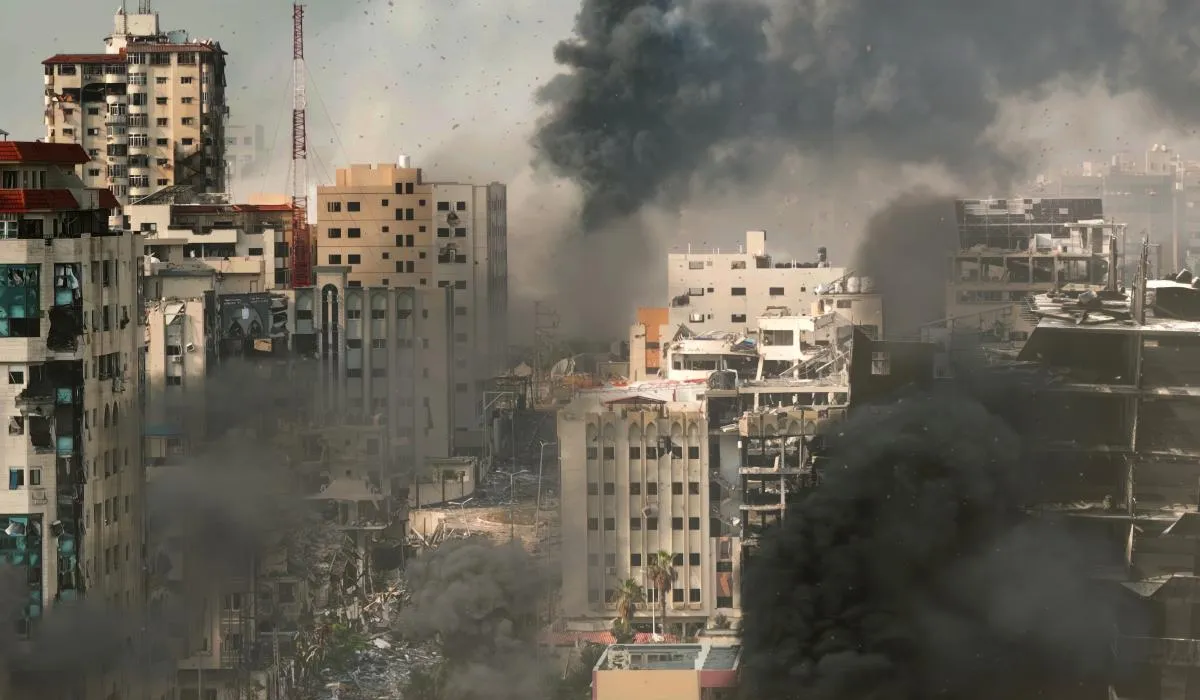
The Middle East stands on the brink of a catastrophic regional conflict, with the ongoing Israel-Gaza war serving as a volatile flashpoint. The fragile ‘rules of escalation’ that once dictated interactions between Iran, its proxies – particularly Hezbollah – and Israel and its allies, seem increasingly tenuous. Israeli Prime Minister Benjamin Netanyahu, emboldened by widespread domestic support for a more aggressive stance, appears intent on pushing the boundaries of confrontation. As tensions rise, the possibility of war between Israel and Hezbollah, and by extension Iran, is more palpable than ever. For nearly a year, the violence has been largely confined to Gaza, parts of the West Bank, northern Israel, and the Golan Heights, but there are signs that the conflict could dangerously expand beyond these areas, drawing in regional and global powers. The situation raises urgent questions about the trajectory of Netanyahu's strategy and the potential for a broader and more devastating war in the region.
An Escalation of Targeted Assassinations by Israel
Since the aftermath of October 7 and the onset of the Israel-Gaza war, the Hebrew state has escalated its tactics by directly targeting Hezbollah leaders, striking them within Lebanese territory. The most significant of these strikes was the assassination of Hezbollah's top military commander in July, Fouad Shukr, in an attack on a civilian building in southern Beirut. This strike, which resulted in the deaths of four civilians, including two children aged 6 and 10, marked a serious escalation. Shukr was considered Hezbollah's second-in-command and one of the founders of its military wing. Israel justified the assassination of Shukr as retaliation for a recent deadly attack on the Golan Heights, a territory that the international community recognises as Syrian territory occupied by Israel.
Just a day after Shukr's assassination, Israel carried out another high-profile strike, killing Ismail Haniyeh, the head of Hamas' political bureau, while he was in Tehran to attend the inauguration of Iran's new president. This attack, which took place in an Iranian government guest house guarded by the Islamic Revolutionary Guard Corps, further intensified tensions in the region, with observers agreeing Iran has to mobilise some form of retaliation. In January, Israel killed Hamas leader Salah al-Arouri with a drone strike in Beirut’s southern suburbs of Dahiyeh, a Hezbollah stronghold. In April, the situation became more volatile when Israel assassinated a top Iranian commander in Syria. Israel has also allegedly conducted an airstrike on the Shayrat military base in Homs, Syria, wounding four Syrian soldiers. While it has not officially confirmed this attack, it has carried out numerous strikes in the country since the onset of the Syrian revolution. The strike in February, for instance, killed three civilians and wounded seven others.
The recent August attacks by both Israel and Hezbollah seem to signal a phase of large-scale confrontation, with the Israeli army launching a major air operation described as pre-emptive, targeting thousands of Hezbollah rocket launcher barrels aimed at northern and central Israel in 40 launch sites in southern Lebanon, and Hezbollah targeting several military and intelligence targets on Sunday morning.
These assassinations highlight the high-stakes and dangerous choreography at play. Despite the escalating violence, it appears that a full-scale regional war has been avoided primarily because all parties involved – Israel, Hezbollah, and Iran – are keen to prevent their main cities from being devastated, while the United States seeks to avoid the global economic chaos that a war-induced spike in oil prices would trigger. The ongoing genocide of Palestinians, however, raises questions about where the red lines truly lie.
This series of events indicates that while there is a concerted effort by all involved parties to avoid a broader regional war, the situation remains incredibly fragile. The targeted killings and retaliatory strikes continue to push the region toward its tipping point.
A proxy war between Russia and the West?
The conflict increasingly has the potential to fuel a broader proxy war between Russia and the West, with Moscow and Tehran strengthening their strategic alliance. Following a meeting between Russia’s Security Council Secretary, Sergei Shoigu, and Iran’s newly inaugurated President Masoud Pezeshkian, reports indicate that Russia is sending advanced air defence systems to Iran. During this meeting, Shoigu reportedly assured Iran of Russia’s support in addressing ‘current regional problems. In response, the United States has deployed ships and fighter jets to the region, replaced its aircraft carrier, and enhanced its readiness to deploy additional land-based ballistic missile defence systems. This military posturing signals the seriousness with which the U.S. views the situation.
Iran has escalated its rhetoric as well, officially warning Israel of an imminent attack through Hungary's Foreign Minister, Péter Szijjártó. Despite this, no Arab country has shown a willingness to intervene in the conflict or deal with ‘the day after’ scenarios that might arise from a further escalation.
Israel's initial objective to annihilate Hamas in Gaza remains unfulfilled. Following the assassination of Haniyeh, Hamas appointed Yahya Al Sinwar as a new leader, the chief architect behind the October 7th attacks. In response to Haniyeh's killing, Hamas has also initially withdrawn from ongoing negotiations, citing the lack of seriousness from Israel and the complicity of the United States in the conflict. The negotiations have since resumed, yet the core issue remains the same: Netanyahu shows no interest in pursuing a ceasefire, using the negotiation process as a stalling tactic, while the U.S. appears indifferent to the ongoing genocide in Gaza, focusing solely on securing a hostage deal. Both are also notoriously struggling to align on a common objective.
A Shaky American Position
The United States finds itself in an increasingly precarious position as the conflict in the Middle East escalates. The Biden administration's unwavering support for Israel is rooted in a long history of pro-Zionism and the U.S.'s strategic interests in the region. However, this support has recently come under greater scrutiny and strain, as the relationship between President Biden and Israeli Prime Minister Benjamin Netanyahu has grown more contentious. Netanyahu appears to be banking on a Trump victory in the upcoming U.S. presidential elections, believing that a change in the American administration would bring more favourable conditions for his hardline policies. Yet a democratic victory would mean little change in the American support to Israel’s war on Gaza, specifically after Harris made it clear she’s sticking to Biden’s line on Gaza by sidelining pro-Palestinian activists from the Uncommitted movement at the Democratic convention. Her meeting with Netanyahu in late July signalled a Harris’s administration would not be genuinely pressuring Netanyahu to accept a ceasefire deal.
Despite toned-down efforts to prevent a regional war, the U.S. finds itself increasingly entangled in a conflict it wishes to avoid. Washington has been actively reaching out to regional players like Egypt, Jordan, Qatar and Saudi Arabia to prevent further escalation. However, it has shown little inclination to apply more substantial pressure on Israel, such as by reducing arms exports or imposing meaningful consequences for actions that escalate the conflict. Instead, the U.S. appears to be deferring to Israel on matters concerning the future of the region, essentially allowing Netanyahu’s security considerations to dictate ‘the day after’ scenarios.
Does International Law Matter, or Does it Not?
The advisory opinion issued by the International Court of Justice (ICJ) on July 19 regarding the Israeli occupation of Palestinian territories marks a significant moment in the international legal landscape, with profound implications for nations worldwide. Commonly referred to as the World Court, the ICJ has meticulously outlined the principles of international law as they apply to the occupation of Gaza and the West Bank. This ruling came in response to a request from the UN General Assembly in late 2022, seeking a legal determination on the legitimacy of Israel's prolonged occupation. In January, the Court already ruled it had enough elements to believe Israel was committing a probable genocide, followed by an injunction to halt its military operation in Gaza completely.
The ICJ’s opinion was unequivocal: Israel’s continued presence in the Occupied Palestinian Territories is unlawful. The court stated that Israel is obligated to end this illegal occupation ‘as rapidly as possible’, emphasising the urgency of compliance. This position was supported by a significant majority, with a vote of 11 to 4.
Furthermore, the ICJ asserted that all States have a legal duty not to recognise the situation resulting from Israel’s unlawful occupation as legitimate. In addition, they must refrain from providing any aid or assistance that would perpetuate the situation created by Israel’s continued presence in the Occupied Territories. This stance was reinforced with a vote of 12 to 3, signalling a strong consensus among the judges.
The ICJ’s advisory opinion raises critical questions about the relevance and enforcement of international law in today's geopolitical context. While the court’s ruling provides a clear legal framework, its practical impact depends on the willingness of the international community to uphold and enforce these principles.
Escalation and the Erosion of International Law
As the Middle East teeters on the brink of a broader regional conflict, the interplay between military escalation, geopolitical manoeuvring, and the disregard for international law has created a highly volatile and dangerous environment. Israel’s aggressive actions, backed by the explicit approval of the United States, have pushed the region closer to an all-out war, while the involvement of global powers like Russia hints at the potential for a larger proxy conflict.
As the U.S. continues to support Israel unconditionally, it risks triggering a conflict with far-reaching consequences, both in the region and globally. The increasing involvement of global powers like Russia, and the internal pressures within the U.S. political landscape, further complicate the situation, making the prospect of a peaceful resolution even more remote. While Kamala Harris’ candidacy is a beacon of hope for many, it offers little promise of meaningful change for Palestinians.
The World Court’s advisory opinion on the illegality of Israel's occupation of Palestinian territories underscores the growing disconnect between legal principles and political realities. While the ICJ provides a clear legal framework, the lack of enforcement and the indifference of the Western bloc undermines the relevance of international law in resolving such conflicts, and, more broadly, the post-World War II global order.
Other Researches