The EU is Moving to the Right: A Gamechanger in Gulf-European Relations, or More of the Same?
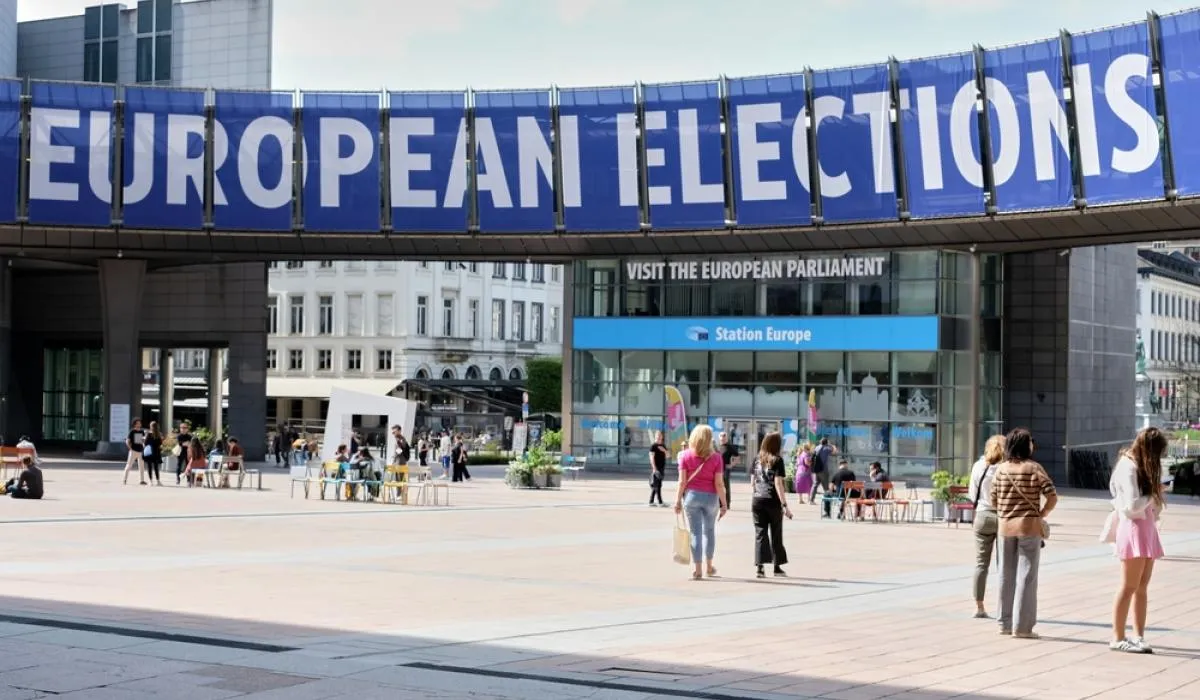
The turnout of the recent EU Parliament elections in June sent shockwaves through parts of Europe. Despite the fact that EU Commission President Ursula von der Leyen stated that “the centre is holding” and centrist parties remained the strongest bloc, right-wing parties gained massive ground in the elections. In total, those parties won around 175 seats from 750. In important Member States such as France and Germany, the governing parties witnessed a major setback, losing significant voting shares at the cost of populist, far right-wing parties.
The Rassemblement National (RN) in France, for instance, won 31.3% of the vote (30 seats), whereas President Emmanuel Macron’s party only garnered 14.6%. In Germany, the Alternative for Germany (AfD) claimed 15.9% (15 seats), ranking second after the conservative Christian Democratic Party (CDU) (30%), with the Social Democratic Party (SDP) of Germany’s chancellor Olaf Scholz trailing behind at only 13.9%. In Italy, the Fratelli d’Italia Party of Prime Minister Giorgia Meloni consolidated its position with 28.7% of the vote (24 seats). Those cases exemplify a general trend throughout Europe: right-wing parties still in power were able to cement their power, and oppositional rightist parties achieved better results than in previous EU elections. Correspondingly, the EU is clearly moving right. In particular, young voters – mainly men – are supporting the right-wing parties: in France, RN took a 25% share of the vote among 18-24 year olds, and in Poland, support for the far-right Confederation among 18-29 year old voters increased from 18.5% to 30.1%.
The election results thus pose a significant challenge for the EU and their decision-making circles. The centrist parties led by von der Leyen’s European People’s Party (EPP) – which won 186 of 720 seats in the parliament – are obliged to form a coalition with the Progressive Alliance of Socialists and Democrats (S&D) and the liberal Renew Europe party so that right-wing parties do not win a stronghold; a balancing act that has become more complex and complicated after the elections. A political group in the European Parliament must have at least 25 members of parliament drawn from a minimum of seven EU countries.
Von der Leyen was nominated to retain her job as the most powerful political figure in the EU system, and worked together with leaders of relevant member states to form an alliance with social democrats and liberals. However, her ambitions to include right-wing Meloni in her coalition have spurred hot controversies about the future liberal character of the EU in light of growing populism and anti-European sentiments. Unchecked, contested topics such as a harder position on immigration, opposition against the European ambitions to promote green energy and climate action, reduced support for Ukraine, and pro-authoritarian, racist, nationalist and Islamophobian views will gain even more prominence due to the electoral successes of right-wing parties.
Hence, the political legitimacy and stability of the EU seems to be on the brink; as such, Eurosceptic movements aim to seize their chance and disrupt the EU from within. On a global scale, the EU finds itself still in a challenging situation, as the Russian war on Ukraine continues to put Europe’s unity at test; whereas the potential victory of Donald Trump in the US presidential elections in November and the competition with China and other authoritarian states is raising concerns about the future capabilities of the EU to preserve its values, interests and credibility. Additionally, the results have serious implications for some national governments.
For instance, Macron dissolved the French parliament in the direct aftermath of his party’s defeat on the European level, calling for new elections on June 30th and July 7th, which ultimately led to a paralysis in the parliament due to the lack of a clear majority. This impasse arose despite his party's efforts to secure a decisive victory, ultimately resulting in a fragmented assembly and ongoing legislative gridlock. In Germany, similar discussions took place, but so far the ‘traffic light’ coalition consisting of Scholz’s SDP, the Greens, and the liberal Free Democratic Party (FDP) refused to call for new elections notwithstanding fundamental grievances and tensions.
The view from the Gulf: Growing anti-European ressentiment versus finding a pragmatic modus operandi
In most of the member states of the Gulf Cooperation Council (GCC), the EU elections held no priority in the public and political discourse, and the results did not come as a surprise. In light of growing regional tensions and the ongoing Israel-Gaza war, Gulf governments are mainly focusing on their direct neighbourhood by promoting de-escalation and partner diversification.
In this regard, the EU is still a relevant political and, in particular, economic partner, but does not enjoy an outstandingly positive reputation. In recent years, frustration with the over-bloated, inefficient and time-consuming decision-making procedures has intensified, and the Israel-Gaza war has caused a deep rift between some European Member States and the Arab world due to the former pro-Israeli position. Certainly, the rise of right-wing parties on a European level constitutes a concern for the Gulf states: Anti-Arabism, Islamophobia and critical positions on the Palestinian cause have gained popular attraction across several European countries, such as in Germany, and has accelerated in the aftermath of October 2023.
In particular, the upcoming EU presidency of Hungary is observed sceptically: Prime Minister Viktor Orban’s anti-migration and anti-Islamic propaganda and his close support for Israel’s government under Prime Minister Benjamin Netanyahu could drive a further wedge between the Gulf and the EU. As outlined in an op-ed written by the GCC General Secretary Dr. Abdel Aziz Aluwaisheg in the Saudi newspaper Arab News, “In addition to the particulars of the Palestine-Israel conflict, Islamophobia has been weaponized in Hungary’s politics”, accusing the Hungarian government of “Muslim-bashing” and “irrational xenophobia”.
Furthermore, the opaque deal to nominate von der Leyen as the old and new EU Commission’s president undermines the general image of the EU as a role model in democratic transparency. Consequently, inner-European fragmentation, the rise in nationalist protectionism, backdoor deals about personalities, and European contestation on the Israel-Gaza war do result in rising anti-European sentiments inside the Gulf states. Additionally, the implications of the EU elections on a national level are followed with great concern: Macron’s decision to dissolve the French parliament has raised questions about France’s position on the Near and Middle East if the extreme right should seize power.
For some of the Gulf states, France under Macron has emerged as a strategically relevant partner in economic, political and security cooperation, and the leap into the unknown could also undermine the bilateral partnership with France and the Gulf states as “relations will go through a phase where everything will have to be reinvented.” As the governments in Saudi Arabia, the United Arab Emirates (UAE) or Qatar are seeking economic diversification, they are in dire need of predictability in their partnerships. Indeed, in times of turbulent domestic powerplay in major European countries such as France, this reliability and credibility is at risk in an era of “a seismic shift to the right”.
Finally, the anti-Palestinian position of the far-right French parties could undermine any French move to recognise the Palestinian state. Some are expecting even the exit of France from the EU (‘Frexit’) if the extremist right-wing movement would win the next elections.
Despite such frustration, the EU remains a strategic partner for the GCC and the respective member states. Since the beginning of the Israel-Gaza war, EU-Gulf dialogue is constantly taking place in order to work on de-escalation and conflict resolution. In this regard, the Gulf states have established close communication lines with not only the governments of specific EU Member States, but with EU representatives also. In 2023, for example, the 27th GCC-EU Joint Council and Ministerial Meeting took place in Oman.
There, the participants reached an agreement to focus their cooperation on trade and investment, the green transition and energy security, regional security and stability, humanitarian and developmental issues, governance, reform, and human rights and institutional cooperation. Similarly, in January 2024, the first meeting of the GCC-EU regional security dialogue was hosted by Qatar. Institutionally, the EU and the GCC aim to promote consistent collaboration by developing a joint action programme until 2027 and a regular security dialogue. Furthermore, von der Leyen, European Council President Charles Michel, and the High Representative/Vice-President of the EU Commission Josep Borrell, travelled to most of the GCC countries regularly and met with officials from the GCC and respective member states. In addition, Luigi di Maio, who was appointed as Special Representative for the Gulf region in June 2022, also visited the region several times and established close ties with Gulf officials and other stakeholders. Despite the fact that he faced some scepticism soon after his nomination from the Gulf states, his reputation has significantly improved as he works intensively on trustworthy communication lines and personal networks. In turn, for instance, GCC Secretary-General Jasem Albudaiwi has travelled to Brussels several times. On a working level, the opening of the new EU delegation in Qatar in September 2022 – in addition to delegations in Saudi Arabia, the UAE and Kuwait – again shows the strategic relevance the GCC has for the EU.
Based on the 2022 EU Strategy on the Gulf, concrete policy fields of enhanced cooperation have been defined, such as maritime security, digitalisation, education and knowledge transfer, development cooperation and humanitarian aid, security and regional integration, enhanced connectivity, trade and investment, climate action, as well as economic and energy diversification.
Although not all original expectations have been met yet, some actions show positive results: for instance, at the EU-GCC High Level Forum on Regional Security and Cooperation in Luxembourg in April 2024, it was agreed that Bahraini, Omani and Saudi Arabian nationals will be eligible for multiple-entry visas, allowing them to visit the Schengen area and move freely between them. In particular, security cooperation has intensified in light of growing regional escalation: in terms of maritime security, the ASPIDES mission in the Red Sea indicates a general commitment of European countries to invest more capacities into the protection of sea routes. However, the Gulf states expect more engagement in this field, and criticise the mission as being mainly symbolic.
Against this backdrop, general expectations of enhanced EU-GCC relations are driven by a sceptical optimism and transactionalism on the Gulf side. They are mainly focused on the following concrete policy fields:
· Migration: In recent years, the EU has taken a stricter position on immigration, such as the New Pact on Migration and Asylum adopted by the EU Council in May 2024, and as indicated by a “contain first, answer later” approach that includes tight border control measures and externalisation policies to sign agreements with North African countries to mitigate immigration to Europe. As right-wing parties are becoming stronger on the EU level, attention on externalisation and securitisation efforts to contain migration on the short-term could rise, whereas root causes of migration such as instability, economic hardship, and climate change impacts in the countries of origin are widely neglected. Such a scenario provides chances and challenges at the same time for the Gulf states: on the one hand, such parties are ideologically inclined to reduce drastically the number of migrants to the EU, following an anti-migration and racist agenda that is oftentimes closely interlinked with anti-Arab and anti-Islam resentments. This attitude is deeply concerning for political stakeholders in the Gulf states. On the other hand, in light of substantial efforts to nationalise the job markets and reduce the number of non-nationals, migration from Asia and Africa also poses a challenge for most of the GCC states. Here, migration could create a potential synergy effect to join forces on a bilateral level: for instance, the International Conference on Development and Migration (“Rome Process”) in July 2023 initiated by Italy’s right-wing Prime Minister Giorgia Meloni was also attended by the UAE’s President Mohamed bin Zayed Al Nahyan, and aims to promote trans-regional cooperation focusing on irregular migration. This example shows that GCC states do not hesitate to cooperate with right-wing governments in particular policy files of national strategic interests.
· Economy: For the EU and its economic agenda, the Gulf region remains a strategic partner of relevance due to its centrality as both a business partner and in connecting Asia and Europe. In light of ambitious transformation efforts in countries such as Saudi Arabia, the EU looks to the Gulf as a partner of economic diversification and energy partnership. In 2023, trade from the EU to the GCC amounted to EUR 93.8 billion, and EU imports from the GCC to EUR 76.3 billion. In 2020, the EU was the second largest trade partner of the GCC, with a share of 12.3% after China’s15.8%. This trend is likely to continue as companies from the EU consider the Gulf region as an attractive market and vice versa. Thus, it seems unlikely that the rise of right-wing parties could seriously impact such economic cooperation.
· Climate action: Indeed, climate action is a top priority for the EU, as indicated by the Green Deal. The EU has formulated ambitious goals to become climate-neutral by 2050, reach an economy with net-zero greenhouse gas emissions, and promote alternative energy and sustainability. In the field of energy transition, most of the Gulf states have outlined similar goals, investing in non-fossil alternative energy such as solar, wind and in particular, hydrogen. Here, both the EU and Gulf states have already enhanced cooperation: for instance, in April, the EU-GCC Cooperation on Green Transition project was introduced. The project aims to create a joint platform to exchange best practices and expertise between the EU and the GCC, promoting and adopting policies and technologies that support the GCC’s green transition, and fostering a collaborative business environment between EU green tech companies and their counterparts in the Gulf region. Nevertheless, right-wing parties resist the green transition, as they are more interested in promoting traditional energy sources and perceive environmental regulations as a risk for economic competitiveness. For instance, both Poland’s opposition Law and Justice party (PiS) and Flemish nationalist Flemish Interest (VB) party opposed the Green Deal during their European election campaigns. Furthermore, the EU’s commitment to contribute financially to the Loss and Damage fund that was introduced during the climate conference COP28 in the UAE last December 2023 may also be affected. Here, again, Gulf governments could act in a pragmatic manner to such a trend: in Saudi Arabia, the UAE and Qatar, revenues from fossil resources such as oil and gas still feature prominently. Hence, they are performing a balancing act: on the one hand, they aim to diversify their energy mix away from oil. On the other, they do not want to completely replace oil and gas with renewable energy. Therefore, a growing appetite in the EU for traditional energy could also benefit the Gulf’s current business models.
· Personalities: The nomination of Ursula von der Leyen as old and new Commission President is welcomed by most of the Gulf governments, as she stands for continuity and pragmatism. In addition, Kaja Kallas, the current prime minister of Estonia and member of the EU Parliament from 2014 to 2018, is expected to be appointed as the new EU High Representative of the Union for Foreign Affairs and Security Policy. Described as the “iron lady”, she is predicted to take a harsh anti-Russian position and aims to promote investments in Europe’s defence and security. In June 2023, she met with the Saudi Minister of Investment Khalid bin Abdulaziz Al-Falih in Tallinn, but
her connections to the Gulf region are not yet well established. Kallas thus needs to reach out to the Gulf more comprehensively. In turn, di Maio has consolidated his reputation in recent months, and is now considered by most of the Gulf state representatives as a trustworthy and reliable partner who shows personal passion and commitment to enhance the EU-GCC cooperation.
Quo vadis, EU-GCC cooperation?
Geostrategically, Gulf states approaches are mainly driven by transactional pragmatism, which will also remain the driving force in dealing with right-wing parties across Europe. One Gulf official emphasised that “we are pragmatic, practical and problem-solving people, no ideologists.” As indicated by the collaboration with the Meloni government in Italy, the Gulf states are mainly interested in concrete results rather than ideological fault lines and emotional debates. Against this backdrop, the EU elections cannot be considered as a gamechanger for the relations with the Gulf. Indeed, the rise of the right-wing parties is considered a deep concern for some Gulf states due to a potential rise in ideological anti-Arab, anti-migration and Islamophobian sentiments. However, such a trend does not come as a surprise for the Gulf states, as populism and nationalism still feature prominently in most of the EU member states. Therefore, the Gulf states most likely aim to identify niches for pragmatic cooperation with a more right-wing EU. As most of the old and new top personalities remain committed to open trade, economic partnership, energy diversification, and know-how transfer, the potential for EU-GCC cooperation remains promising despite the right-wing wave.
In this regard, the Strategic Agenda 2024-2029 of the EU, adopted in June 2024, provides promising opportunities for EU-GCC cooperation. Focusing on topics of mutual interest such as security and defence, resilience and competitiveness, energy, economic modernisation and entrepreneurship, and migration, it aims to improve the EU’s position in a multi-polar world order, arguing that the EU should “adapt to the ever-evolving circumstances, asserting the European Union’s sovereignty and its place as a strategic global player in the new multipolar geopolitical context.” By further addressing mutual GCC-EU interests, such as investments into the defence and security industry, promoting diversified business partnerships, and working on inter-regional connectivity, the agenda implicitly addresses future potential in cooperation with the GCC.
However, challenges remain significant. The contestation and polarisation in light of the Israel-Gaza war is likely to continue under Hungary’s EU presidency, and could further derail the EU-GCC strategic partnership due to the strong pro-Israeli position of most of the right-wing parties. One Saudi analyst called the current Gaza debate in Europe “an irreversible strategic and moral defeat”.
Hence, the once-untouchable European reputation could see a further backlash in the Gulf region if political dialogue and constructive efforts for mutual conflict resolution do not materialise. Fractions of the political establishment in relevant EU Member States such as France and Germany could also result in more unpredictability, thereby damaging the reputation of the EU as a bulwark against illiberal forces, populism and extremism. Here, the EU should acknowledge in more substantial ways that the Gulf states have become epicentres of global powerplay, relevant forces in energy transition, international trade hubs, as well as investment locations and global investors.
Emerging middle powers such as the UAE or Qatar have already positioned themselves in a multi-polar world order, seeking multi-alignment and partner diversification. Still, EU representatives need to take such a fundamental transformation into more strategic consideration.
One Saudi representative remarked that “we are not Las Vegas: what happens in Saudi Arabia, impacts the world.” Indeed, European politicians, businesspeople and other stakeholders need to understand that “you don’t exist if you don’t show up”, and that despite more frequent visits and alignment in several political, security and economic files, further measures need to be taken in order to establish a sustainable and long-term GCC-EU partnership model that will not be negatively affected by right-wing parties.
For instance, the potential to enhance joint activities in development cooperation and humanitarian still remains untapped, as no concrete projects have been implemented yet. Of course, dialogue among the respective stakeholders exist, but the European side is concerned about reputational risks, whereas the Gulf partners in development cooperation are frustrated about bureaucratic inefficiencies and financial shortages.
Other actions need to be materialised: for instance, the negotiations on the EU-GCC Free Trade Area should be revitalised, more regular expert dialogues are needed on energy and climate, cultural, educational, and scientific exchange formats, as well as the initiation of EU-GCC ministerial meetings on humanitarian assistance.
To strengthen EU-GCC relations, both regions should collaborate with think tanks, which are crucial for providing in-depth research, policy analysis, and strategic recommendations. Think tanks can facilitate dialogue, offer objective insights, and develop comprehensive strategies addressing shared challenges such as energy security, economic diversification, and geopolitical stability. Establishing joint research initiatives and forums can foster mutual understanding and innovation, ensuring that policies are well-informed and adaptable to the rapidly changing global landscape. This collaboration can also bridge gaps in knowledge, enhance diplomatic relations, and support sustainable development goals for both regions.
Dr. Ramadan Abu Jazar contributed to this article
Other Researches