The EU-GCC Summit: Late, But Not Too Late.
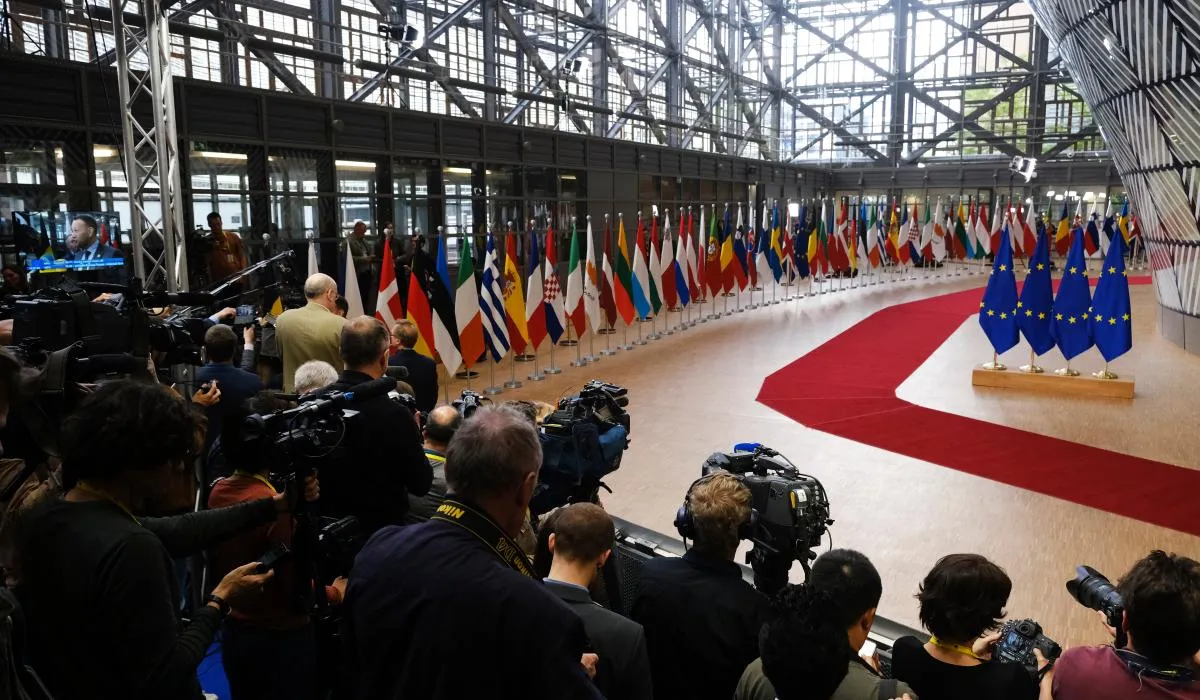
The first summit between high-ranking representatives of the European Union (EU) and the member states of the Gulf Cooperation Council (GCC) that took place in Brussels on October 16th, 2024, came late – but not too late. In times of growing regional tensions, the summit sent a relevant message that both Europe and the Gulf states are highly interested in regional security and de-escalation. Despite existing grievances, missed opportunities and fault lines, the representatives underlined in their joint statement shared interests in security, energy and economic cooperation, cultural exchange and technological partnership.
The ongoing Israel-Gaza war and the war on Ukraine serve as a definitively eye-opening wake-up call for both the EU and the GCC to adjust their strategies and focus more than ever on commonalities and shared interests. As such, high representatives from EU member states such as France’s President Emmanuel Macron, Italy’s Prime Minister Giorgia Meloni and Denmark’s Prime Minister Mette Frederiksen made a point of attending the summit. From the Gulf, Qatar’s Emir Tamim and Saudi Arabia’s Crown Prince Muhammad bin Salman were the most prominent leaders who travelled to Europe. In addition, Qatar’s Prime Minister and Minister of Foreign Affairs Sheikh Mohammed bin Abdulrahman bin Jassim Al Thani, the UAE’s Vice President and Minister of Finance, Sheikh Mohammed bin Rashid Al Maktoum, Kuwait’s Prime Minister Sheikh Ahmad Abdullah Al-Ahmad Al Sabah, Oman’s Deputy Prime Minister for International Relations and Cooperation Affairs and Personal Representative of His Majesty the Sultan Sayyid Asaad bin Tarik al-Said and GCC’s Secretary General Jasem Mohamed Albudaiwi – among others – attended the summit.
Culmination of intensified process in EU-GCC relations
Consequently, the summit has been considered a ‘milestone’ in EU-Gulf relations and represents the temporary culmination of a process that gained momentum in 2022. At that time, the EU published its joint communication strategy for cooperation with the GCC. In this strategy, the EU emphasises the growing relevance of the Gulf states in regional and geopolitical matters, as well as their importance as partners in the fight against climate change.
Until then, the relationship between the EU and the Gulf states was primarily based on economic and trade relations, but politically, it remained relatively superficial and limited. Although the economic dimension continues to play a significant role in the relationship, the EU has increasingly recognised that, in a world full of crises, the Gulf states are not just a partner of choice but a partner of necessity that cannot be neglected.
This assessment was reflected in a number of initiatives. Since the launch of the EU GCC strategy, for example, a new EU Delegation opened in Qatar in 2022, adding to the ones already in place in Kuwait, Saudi Arabia and the UAE. Luigi Di Maio was appointed EU Special Envoy for the Gulf States in May 2023, and initial ministerial meetings were held to address issues of regional security such as the structured security dialogue in January 2024 in Riyadh, the ministerial High-Level Forum on Regional Security and Cooperation in April 2024 in Luxembourg, or the Joint Council and Ministerial meetings in Brussels in 2022 and in October 2023 in Oman. These initiatives have brought new momentum to EU-Gulf relations, which the summit aims to continue.
Key areas of cooperation remain unchanged: energy cooperation – especially in the fields of hydrogen and renewable energy – will remain a relevant focus, as are investments, trade, cultural exchange, interconnectivity, secure trade routes, development cooperation and migration. However, the summit’s final declaration also explicitly mentions enhanced security cooperation by addressing the most dramatic crises: Both sides aim to cooperate more closely on the Israel-Gaza war and Russia’s war of aggression against Ukraine, emphasising their shared interest in regional stability.
The Gaza Dilemma: in search of a coherent position
However, in the Gulf, the EU is widely perceived with growing frustration after the Israel-Gaza war started more than one year ago. Many in the region view the EU as a hypocritical actor with an ‘image of weakness’, as it is not doing enough to de-escalate the conflict. The final statement thus aims to bridge such opposing perspectives. It emphasises the ‘unwavering commitment to the realisation of the right of the Palestinian people to self-determination through the two-State solution’, criticises the violence and expansion of Israeli settlements in the West Bank, and welcomes the Global Alliance of Two-State Solutions led by the GCC, EU and Norway.
Indeed, the two-State solution has been prominently advanced through diplomatic efforts in European capitals such as Madrid and Oslo, but other EU member states are showing more resistance. The stance of some EU member states is thus criticised as being one-sidedly pro-Israel, which is leading to a significant loss of trust and credibility. Interlocutors in Gulf states are perplexed and upset by the pro-Israeli position of some European member states and the lack of commitment to push for a ceasefire and create a realistic option to achieve a two-State solution. In contrast to the EU, strict action towards the Russian war of aggression against Ukraine, Europe is seen as acting on a double standard, carving out its own view of human rights, humanitarian law and justice.
The Ukraine War: diverging positions on Russia
Regarding the war in Ukraine, the EU had hoped for stronger Gulf opposition to Russia, but countries like Saudi Arabia have declined to take such a position due to its complex relations with Russia within OPEC+ or the UAE’s role in the BRICS+ group, in which Russia is also a member. Hence, strategic ambiguity regarding the conflict exists in order to protect respective national interests. Since the beginning of the Ukraine war in February 2022, some Gulf states such as Saudi Arabia, Qatar and the UAE have undertaken mediation efforts that resulted in the release of Ukrainian children detained in Russia – negotiated by Qatar – and the exchange of war prisoners facilitated by Saudi Arabia and the UAE.
Saudi Arabia also provided more than USD 410 million in humanitarian aid and the UAE USD 105 million. In August 2023, the kingdom also held an international summit on the war in Ukraine in order to push its “Not Alone Saudi” approach as an international honest broker with flexible communication lines to all warring parties. Despite the fact that Europe conveyed the message to the Gulf that Russia was, is, and remains to be an unreliable partner and holds close military ties to Iran, for them, Moscow is a partner in energy, security, and economy in times of global power shifts and de-risking efforts.
Illustratively, in October 2024, Russia’s President Vladimir Putin called Saudi Arabia an acceptable location for Russian-Ukrainian peace talks. Nevertheless, both the EU and the GCC agreed to demand Russia’s withdrawal of all of its military forces from the territory of Ukraine within its internationally recognised borders. They have also expressed interest in supporting all efforts to facilitate the export of grains and all food and humanitarian supplies to contribute to achieving food security for the affected countries.
Maritime Security: untapped potential
In terms of maritime security, both the EU and the GCC show a strategic interest in enhancing cooperation to preserve global sea trade and commerce lines. Nevertheless, substantial outcomes remain weak so far. In the Red Sea, the European naval mission Aspides is considered a step in the right direction by the Gulf states, but they did not join it. From their perspective, efforts are poorly managed and too incomprehensive to stop local attacks of the Yemeni Houthis on international vessels.
So far, coordination with GCC activities is lacking. Furthermore, the GCC demands from the EU a more comprehensive security and defence strategy, including expanded military-to-military contacts, closer cooperation in the security industry, and joint military training sessions feature prominently on their agenda.
Dealing with Iran: deterrence and de-escalation
Both the EU and the GCC are following Iran’s nuclear aspirations, the growing escalation of tensions with Israel and its support for regional proxies such as Hezbollah, Hamas or the Houthis, as well as ballistic missile deliveries to Russia with serious concern. In the final statement, the importance of diplomatic engagement with Iran and the need for joint EU-GCC dialogue on Iran are stressed. However, strategies how for dealing with Iran differ from each other: whereas the level of EU engagement with Iran has decreased in recent years, it has intensified from the Gulf states’ side. They are in fact promoting tactical reconciliation with Iran, highlighted by the resumption of ties between Riyadh and Tehran in March 2023. As most of the Gulf states are highly interested in conflict mitigation and de-escalation, they will continue to engage with Tehran in order to avoid a full-fledged regional war.
Direct communication channels have been established and Iranian and Gulf officials are meeting regularly. After the killing of Hezbollah’s leader Hassan Nasrallah in October 2024, Iran’s Foreign Minister Seyed Abbas Araghchi travelled to Doha to meet with his Gulf counterparts and personally discussed regional affairs with Muhammad bin Salman.
However, mistrust in Iran remains high as the Islamic Republic still poses a direct security threat to the Gulf states, and the EU’s position on Iran is currently mainly driven by deterrence based on new sanctions. Against this backdrop, adopting a nuanced approach that balances deterrence with diplomatic engagement is sorely needed. For instance, Gulf states such as Saudi Arabia could be involved as monitoring parties in case Europe restarts negotiations with Iran on the nuclear program.
Reconstructing people: cultural dialogue and education
So far, public knowledge about the EU on the Gulf and vice versa seems to be minimal. Expert discussions and a constructive debate about the necessity to engage with each other are oftentimes limited to a small policy-making and expert community and are lacking a broader dimension, including actors from media, civil society, and large parts of societies. This needs to be addressed.
Therefore, the EU and the GCC aim to intensify people-to-people contacts to invest in the ‘reconstruction of people’ in an effort to rebuild trust and generate more knowledge.
The EU can support cross-regional ties in education, vocational training, skills development and civic participation. From 2021-2027, for instance, the EU-initiated Erasmus+ will offer possibilities for partner institutions in the Gulf to develop curricula such as teaching modules on EU-related matters via the Jean Monnet actions.
Higher education institutions from the region will also be able to join academic consortia with the EU and other international partners, delivering integrated Master’s degree programmes via the Erasmus Mundus Joint Masters. In addition, the International Credit Mobility, which facilitates short-term exchanges for academic students and staff, and the Erasmus Mundus Design Measures, which offer the opportunity to co-design a joint Master’s degree, are now also accessible to partner institutions in the Gulf region.
Business matters: economic and energy relations and interconnectivity
Economic cooperation constitutes the most robust pillar of EU-GCC relations. After all, the EU is the Gulf states’ second largest trading partner after China. Additionally, the EU’s outward investments in the GCC, which reached EUR 215 billion in 2022, make it one of the largest investors in the region.
Institutional business meetings such as EU-GCC business forums or the inauguration of the first European Chamber of Commerce in the Gulf region in Riyadh in May 2024 show some progress in EU-GCC economic affairs. For instance, for the EU, the GCC has emerged as a relevant partner in energy and trade, whereas the Gulf considers the EU as an interesting partner in technology, digital transformation, know-how transfer, investments, artificial intelligence (AI), tourism, fintech and health.
As all Gulf states are undergoing substantial socioeconomic transformation and have to create jobs for their young populations, they are in dire need of comprehensive partnership models, foreign direct investments and trade. Here, the EU remains an attractive business partner. However, the most contested issue remains the failed implementation of an EU-GCC free trade agreement (FTA), which was initiated 35 years ago.
After negotiations were put on hold in 2008, they were revived in 2023, and the goal to aim for a regional FTA is still mentioned in the joint statement. However, a breakthrough is not in sight, which is why Gulf experts and EU representations are rather pessimistic that a multilateral FTA could be achieved. Instead of a realistic option, the FTA has become an obstacle and obsession that some observers already call dead. Therefore, alternatives are discussed, and some Gulf and European governments are pushing for bilateral agreements, which is not in the EU’s interest.
Additionally, Europe’s need for energy diversification since the beginning of the Ukraine war has accelerated cooperation agreements with Gulf energy producers. The EU and the GCC also want to push more multilateral cooperation in renewables and hydrogen, but here, again, bilateral deals are considered as prioritised options indicated by Germany’s increased energy cooperation with Qatar and the UAE.
The EU-GCC Green Transition Project was launched in April 2024, but still, concrete cooperation on a multilateral level remains limited, as the EU Member States do not position themselves as relevant off-takers for hydrogen imports from the Gulf. High costs and difficult transport remain additional challenges.
Furthermore, opposing views on the speed and comprehensiveness of decarbonisation efforts have resulted in a lack of concrete cooperation. For the Gulf states, decarbonisation has emerged as a strategic goal – but not at all cost. As they are still relying on fossil resources, decarbonisation will happen through carbonisation. The EU, in turn, is promoting its Green Deal and pushing for more green energy cooperation. However, real leverage is lacking, as the Gulf states are exporting most of their fossil energy to Asian countries; Europe has lost its significance. Furthermore, the challenge of the EU is, quite simply, that it is the EU: oftentimes, institutional procedures are too time-consuming and too bureaucratic, which also hampers EU-GCC energy cooperation.
Finally, interconnectivity to diversify and secure supply chains globally needs to be improved to promote energy and economic partnership in the fields of data cable connections, energy grid integration or hydrogen transportation. Joint initiatives such as the India-Middle East-Europe Economic Corridor (IMEC) and the EU framework of Global Gateway have not yet materialised, and perspectives look grim in light of regional escalation. However, both parties need each other to achieve their ambitious economic goals. In this regard, trilateral partnerships in African regions or Asia could become a concrete field of mutual action if expectations are managed realistically.
From a Eurocentric perspective, expertise in project conceptualisation and implementation needs to be shared among equals rather than considering the oil-rich Gulf states purely as ATMs. Shifting trends in Gulf states’ development assistance – characterised by a nexus of aid provision and economic investment – provide EU initiatives new chances for mutual cooperation, such as Global Gateway and departments such as DG ECHO.
Restoring credibility: challenges and chances will remain high
For the Gulf states, the EU remains an important partner, but not the most important one. In a time of multipolar global reorganisation, all Gulf states are diversifying their international partnerships. Closer cooperation with China, Russia, India, and other non-Western actors has, therefore, become a key principle in the Gulf: to make their national economies less dependent on oil, the Gulf states need as many business relationships as possible. For this reason, they do not want to align with any one bloc, but instead seek to maintain strategic autonomy. In this context, the EU remains relevant, particularly in terms of economic, technological and cultural cooperation.
However, EU-GCC relations will remain difficult and complex. In the Gulf, the EU is criticised for being divided, fragmented, overly bureaucratic and inflexible. Furthermore, divergent interests and perspectives on the EU exist even within the Gulf, which could make specific joint initiatives more challenging in the future. The credibility of Europe has faced serious damage that could not be easily reversed, as Gulf interlocutors say. Therefore, the summit took place amid a period of growing anti-Western and anti-European sentiment that has intensified since the Israel-Gaza war started.
The EU is mainly considered a ‘toothless tiger’ and a bystander in regional affairs that is lacking political leverage. Indeed, a growing rift between the Gulf region and Europe and intensified whataboutism in times of right-wing populism and cultural polarisation, Islamophobia, and the highly controversial debate since the Israel-Gaza war started are seriously undermining opportunities for enhanced cooperation between the Gulf and the EU. A continued lack of understanding inside the EU for the concrete security concerns of the Gulf and a remaining lack of sensitivity in listening rather than lecturing are further fault lines in the relationship.
Nevertheless, this summit could create momentum and causes sceptical optimism. Both sides need each other, and both pursue fundamentally similar goals. Despite existing reservations and a loss of trust, decision-makers in the Gulf and EU agree that the many crises can only be resolved together. This is why further dialogue formats were agreed upon: such summits are now to be held regularly every two years – the next one in 2026 in Saudi Arabia. Meetings at the ministerial level (the next in 2025 in Kuwait), joint initiatives in international climate and energy policy, exchange programs in education, culture, media, sports and the arts, as well as institutional cooperation in trade and economic policy, could bring this momentum to life.
The potential is enormous, but realistic expectations must be managed. To restore lost trust, both sides must take more responsibility as conflict mediators and use their various communication channels to prevent further regional escalation. Still, European donor modalities do not align with Gulf interests, and Gulf non-profit organisations oftentimes lack access to EU support. However, career orientation, training courses for young entrepreneurs, support for family-owned businesses, vocational training and sustainable tourism are fields of mutual interest.
Additionally, upcoming mega events such as the Riyadh Expo 2030 or the FIFA World Cup 2034 could serve as drivers for enhanced people-to-people contacts funded by Gulf and European stakeholders and generate a real sense of ownership between students, researchers, artists, athletes, journalists, and businesspeople. Concrete policy recommendations such as developing a Comprehensive Cybersecurity Pact, implementing a Joint Workforce Development Programs, forming a Security and Defense Council, or promoting joint projects in sustainable urban development are on the table and need to be discussed further.
Ultimately, a strategic partnership can only be realised if Europe acknowledges that relations with the Gulf states can only improve on equal footing and without patronisation. At the same time, there are sometimes inflated and unrealistic expectations of the EU in the Gulf, which lead to misunderstandings and misjudgements.
Other Researches