Enhancing EU-Gulf Strategic Relations: An Analytical and Foresight-Driven Policy Framework
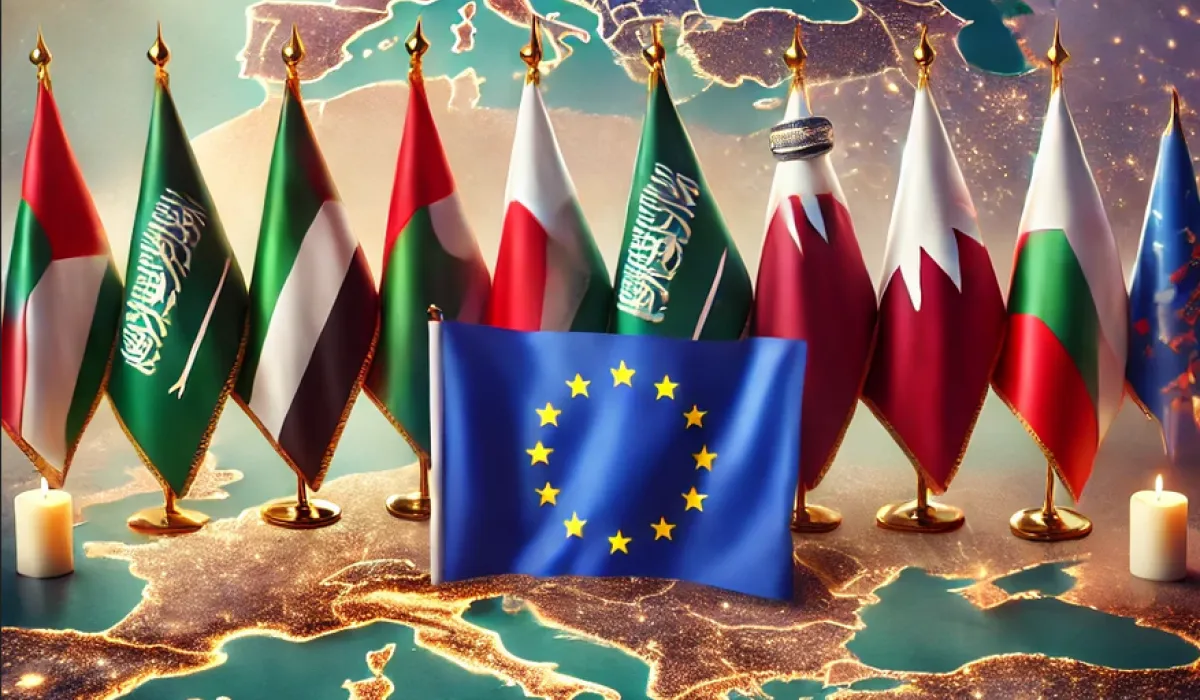
On October 16, the European Union (EU) and the Gulf Cooperation Council (GCC) are set to convene their first-ever summit in Brussels, marking a historic milestone in forging a strategic partnership between these two influential blocs. This inaugural summit underscores the mutual commitment to enhancing economic, political, and security ties, setting the stage for a collaborative future. Leveraging foresight intelligence—a methodology that anticipates future trends and scenarios to inform strategic decision-making—this analysis delves into the evolving dynamics of EU-Gulf relations. It provides a comprehensive, data-driven examination and presents forward-looking policy recommendations from the Brussels International Center to fortify this pivotal alliance.
The Gulf region's enduring strategic importance is underscored by its vast energy reserves, critical maritime routes, and ambitious economic diversification initiatives. Concurrently, the EU is steadfast in its pursuit of energy security, economic resilience, and sustained geopolitical influence. The convergence of these interests creates fertile ground for a newly strategic relationship that promises mutual benefits and shared objectives. By focusing on positive foresight intelligence, this analysis highlights the opportunities that lie ahead, emphasizing collaborative growth, innovation, and sustainable development.
1. Current State of EU-Gulf Relations
Economic interdependencies between the EU and GCC are substantial and evolving. In 2023, bilateral trade exceeded €200 billion, with the EU accounting for 30% of GCC exports. The GCC's proactive shift towards economic diversification, exemplified by Saudi Arabia's Vision 2030 and the UAE's Economic Vision 2021, is transforming the economic landscape. These initiatives prioritize sectors such as tourism, technology, and renewable energy, presenting the EU with new avenues for investment and collaboration. Projections indicate that by 2030, non-oil sectors could contribute up to 60% of GCC GDP, signaling robust potential for joint ventures in emerging industries that can drive sustainable economic growth on both sides.
Political and security cooperation remains a cornerstone of EU-Gulf relations, fostering regional stability amidst a backdrop of complex geopolitical challenges. The upcoming EU-GCC Summit in Brussels is a testament to the deepening commitment to collective security frameworks and intelligence sharing. High-level delegates from both regions are expected to engage in comprehensive dialogues addressing mutual security concerns, including counterterrorism, maritime security, and cyber defense. The summit aims to establish a joint task force dedicated to enhancing cyber defense capabilities and coordinating responses to regional threats. This proactive approach not only strengthens political ties but also builds a resilient foundation for addressing future challenges.
2. Geopolitical Context: Escalating Regional Tensions in the Middle East
Geopolitically, the Middle East is witnessing increasing instability as localized conflicts escalate into broader regional tensions. Recently, Israel has launched numerous attacks and initiated a ground invasion in Lebanon. This aggressive military action has significantly heightened regional tensions, transforming the conflict into a more widespread regional crisis. The escalation underscores the fragile security landscape and the urgent need for coordinated efforts to prevent further destabilization.
The ongoing conflict in Lebanon has severe implications for regional security and humanitarian stability. The ground invasion has led to widespread destruction, civilian casualties, and a burgeoning refugee crisis, affecting neighboring Gulf states and the broader Middle Eastern region. The involvement of Hezbollah, a powerful non-state actor with significant influence in Lebanon, complicates the geopolitical dynamics, drawing in regional and global powers with vested interests in the outcome. The potential for the conflict to spill over into neighboring countries heightens the risk of a broader regional conflagration, threatening economic activities, including vital maritime trade routes in the Red Sea.
The GCC firmly advocates for the establishment of an independent and viable Palestinian state that coexists peacefully alongside the State of Israel. This position is in alignment with that of the European Union (EU), which steadfastly supports the two-state solution as the most viable framework for resolving the Israeli-Palestinian conflict in the Middle East. The two-state solution is widely recognized as a European-driven initiative, having been prominently advanced through diplomatic efforts in European capitals such as Madrid and Oslo.
This convergence between the GCC and the EU underscores a shared strategic interest in promoting regional stability and achieving a sustainable peace settlement. By endorsing the two-state solution, both the GCC and the EU aim to mitigate long-standing tensions, foster economic and security cooperation, and enhance geopolitical stability in the region. The collaborative endorsement of this solution by influential blocs like the GCC and the EU highlights the importance of coordinated international efforts in addressing complex Middle Eastern conflicts and underscores the role of European diplomacy in shaping peace initiatives.
The EU-GCC summit is expected to address these multifaceted geopolitical issues by emphasizing the importance of coordinated diplomatic efforts and conflict resolution mechanisms. By working together, the EU and GCC can play a pivotal role in de-escalating tensions and promoting peace, thereby enhancing regional security and stability. The summit will likely focus on developing unified strategies to counterbalance external influences, support stable governance in conflict-affected areas, and ensure the security of critical maritime routes like the Red Sea. Collaborative initiatives aimed at fostering dialogue between conflicting parties and supporting humanitarian efforts will be essential components of the summit's agenda.
Furthermore, the rising influence of Iran in the region poses a strategic challenge that necessitates a balanced and coordinated response. Iran's involvement in supporting non-state actors and its strategic maneuvers in the Middle East amplify the complexity of the conflict, requiring the EU and GCC to adopt a nuanced approach that balances deterrence with diplomatic engagement. The summit will likely explore frameworks for enhanced intelligence sharing and joint strategic planning to address Iran's regional ambitions and mitigate the risks associated with its actions.
In addition, the member states of the GCC maintain significant apprehension regarding Iran's ongoing nuclear program. Recently, these concerns have intensified due to the growing possibility of Israeli military strikes targeting Iranian nuclear reactors. Such actions could lead to substantial environmental contamination, exacerbating regional instability and posing severe threats to the health and safety of populations across the Gulf region. This escalating tension underscores the urgent need for coordinated diplomatic efforts and strategic measures to mitigate potential environmental and humanitarian impacts, while addressing the broader geopolitical ramifications inherent in the region's security dynamics.
3. Future Opportunities and Strategic Imperatives
Employing foresight intelligence, this analysis anticipates several positive trends that will shape the future of EU-Gulf relations. The global energy transition towards renewable sources presents a unique opportunity for collaboration. The EU’s Green Deal, which aims to reduce carbon emissions by 55% by 2030, aligns seamlessly with the GCC’s investments in solar and hydrogen energy. Joint initiatives in these areas can lead to significant breakthroughs in sustainable energy technologies, positioning both regions as leaders in the global shift towards a low-carbon economy. Collaborative research and development in renewable energy can drive innovation, reduce dependency on fossil fuels, and create new economic opportunities.
Technological innovation and digital transformation are set to drive synergistic growth between the EU and GCC. The Gulf’s ambitious smart city projects, such as NEOM in Saudi Arabia, complement Europe’s expertise in digital governance and sustainable urban planning. By establishing innovation hubs and fostering joint research in artificial intelligence, blockchain, and smart infrastructure, the two regions can accelerate technological advancements that enhance economic diversification and improve quality of life. These innovation hubs will serve as incubators for cutting-edge technologies, facilitating the exchange of knowledge and best practices that can be scaled across both regions.
Geopolitical realignments, characterized by the rise of China and shifting US influence, necessitate a nuanced and forward-thinking EU strategy. By embracing a multipolar approach, the EU and GCC can collaboratively engage with other global powers, fostering a balanced and stable regional order. This strategic agility ensures that EU-Gulf relations remain resilient and influential amidst changing global dynamics, promoting regional harmony and safeguarding mutual interests. Proactive diplomacy and strategic partnerships with emerging global players will enhance the EU-Gulf alliance’s capacity to navigate complex geopolitical landscapes and address transnational challenges.
Demographic shifts present both opportunities and challenges that can be addressed through collaborative workforce development. The youthful populations in the GCC, with a median age of around 30, require substantial investments in education and employment. Simultaneously, Europe faces an aging workforce, creating a demand for innovative solutions to bridge skill gaps. Joint educational and vocational programs can harness the demographic dividends of both regions, fostering innovation and economic growth while enhancing social stability. By investing in human capital development, the EU and GCC can ensure a sustainable and dynamic workforce that meets the evolving economic demands of the future.
To harness these positive trends, several strategic imperatives must guide the future of EU-Gulf relations. An integrated energy transition framework is essential, aligning EU and GCC energy policies to focus on renewable energy projects, hydrogen economies, and carbon neutrality initiatives. Advanced security cooperation mechanisms should be established to address both traditional and emerging threats, including cyber warfare and hybrid threats. Technological synergy and innovation alliances must be fostered to leverage each region’s strengths in AI, blockchain, and smart infrastructure. A dynamic geopolitical strategy that navigates multipolar engagements will ensure resilience amidst shifting global alliances. Additionally, demographic and workforce integration programs are crucial to building human capital that meets the evolving economic demands of both regions.
4. Policy Recommendations from the Brussels International Center
The Brussels International Center advocates for the European Union Summit with the Gulf Cooperation Council (GCC) to inaugurate a comprehensive peace initiative aimed at resolving the Middle Eastern conflict. This proposed initiative should be informed by contemporary developments and incorporate the fundamental principles of the Arab Peace Initiative, which Saudi Arabia introduced two decades ago. Additionally, it should align with the European Union's commitment to the two-state solution, a cornerstone of its Middle Eastern policy framework.
Launching a peace initiative through this summit is strategically significant, as it unites two substantial, influential, and economically robust entities. The collaboration between the EU and GCC presents a unique opportunity to spearhead a transformative peace process that cannot be overlooked. If meticulously designed and implemented during this critical juncture, the initiative has the potential to serve as a pivotal lifeline for all parties involved. Furthermore, given the substantial international respect and influence wielded by both the European Union and the Gulf Cooperation Council, such an initiative is poised to garner widespread global support and endorsement.
This strategic peace initiative would not only leverage the combined diplomatic and economic strengths of the EU and GCC but also enhance their roles as key architects of regional stability and peace. By fostering a collaborative approach, the initiative can address the underlying causes of conflict, promote sustainable development, and ensure long-term peace and security in the Middle East. The Brussels International Center emphasizes that this timely and well-coordinated effort could significantly contribute to achieving a durable and equitable resolution to one of the most enduring conflicts in the world.
To operationalize the strategic imperatives and harness foresight intelligence, the Brussels International Center recommends the following policies for the EU and Gulf countries:
- Create an EU-GCC Energy Transition Alliance: Establish a bilateral alliance focused on joint renewable energy projects, hydrogen research, and carbon capture technologies. This alliance should include funding mechanisms, shared R&D facilities, and policy harmonization to accelerate the energy transition.
- Develop a Comprehensive Cybersecurity Pact: Formulate a cybersecurity pact that includes joint threat assessments, information sharing protocols, and collaborative defense initiatives. This pact should also address data privacy and digital governance standards to ensure interoperability and resilience.
- Launch EU-GCC Innovation Hubs: Establish innovation hubs in key locations within the Gulf and Europe dedicated to AI, blockchain, and smart infrastructure development. These hubs should facilitate cross-regional collaborations, startup incubations, and technology transfer initiatives.
- Institutionalize High-Level Geopolitical Dialogues: Set up regular high-level dialogues and strategic forums to discuss and align on geopolitical strategies, addressing the influence of other global powers and ensuring a unified approach to regional stability.
- Implement Joint Workforce Development Programs: Design and execute workforce development programs that cater to the educational and vocational needs of both regions. This includes scholarships, exchange programs, and joint certification courses in high-demand sectors.
- Establish a Bilateral Security and Defense Council: Create a dedicated council to oversee security cooperation, coordinate defense initiatives, and manage joint responses to regional threats. This council should also facilitate military exchanges and joint training exercises.
- Promote Sustainable Urban Development Projects: Invest in joint sustainable urban development projects, such as smart cities and green infrastructure, leveraging Europe's expertise and the Gulf's investment capabilities. These projects should prioritize sustainability, livability, and technological integration.
- Facilitate Public-Private Partnerships (PPPs): Encourage the formation of PPPs that bring together European and Gulf private sector entities to drive innovation, investment, and economic diversification. These partnerships should focus on sectors like renewable energy, technology, and healthcare.
- Harmonize Digital Governance Standards: Collaborate on harmonizing digital governance standards, ensuring data interoperability, cybersecurity measures, and ethical AI practices. This harmonization will facilitate smoother digital collaborations and protect against cyber threats.
- Enhance Cultural and Educational Exchange Initiatives: Expand and deepen cultural and educational exchange programs to foster mutual understanding and build a foundation for long-term strategic alignment. This includes joint research initiatives, cultural festivals, and collaborative academic programs.
5. Conclusion: Navigating the Future with Strategic Foresight
The strategic partnership between the European Union and Gulf states stands at a transformative juncture. The upcoming EU-GCC Summit in Brussels on October 16 promises to set a promising precedent for deepening collaboration across multiple sectors. By embracing foresight intelligence and focusing on positive future trends, both regions can cultivate a resilient, multifaceted alliance that promotes economic prosperity, technological innovation, and sustainable development. Implementing the Brussels International Center’s policy recommendations will not only strengthen EU-Gulf relations but also contribute to a more balanced and secure global order, ensuring that both regions thrive in an increasingly interconnected and dynamic world.
This analysis critically engages with Israel's military calculus in the current escalation, examining its broader impact on regional dynamics and the humanitarian fallout. The international community—particularly the United States and the European Union—must reassess its approach, shifting from reactive crisis management to strategic interventions that address the structural drivers of conflict.
Other Researches