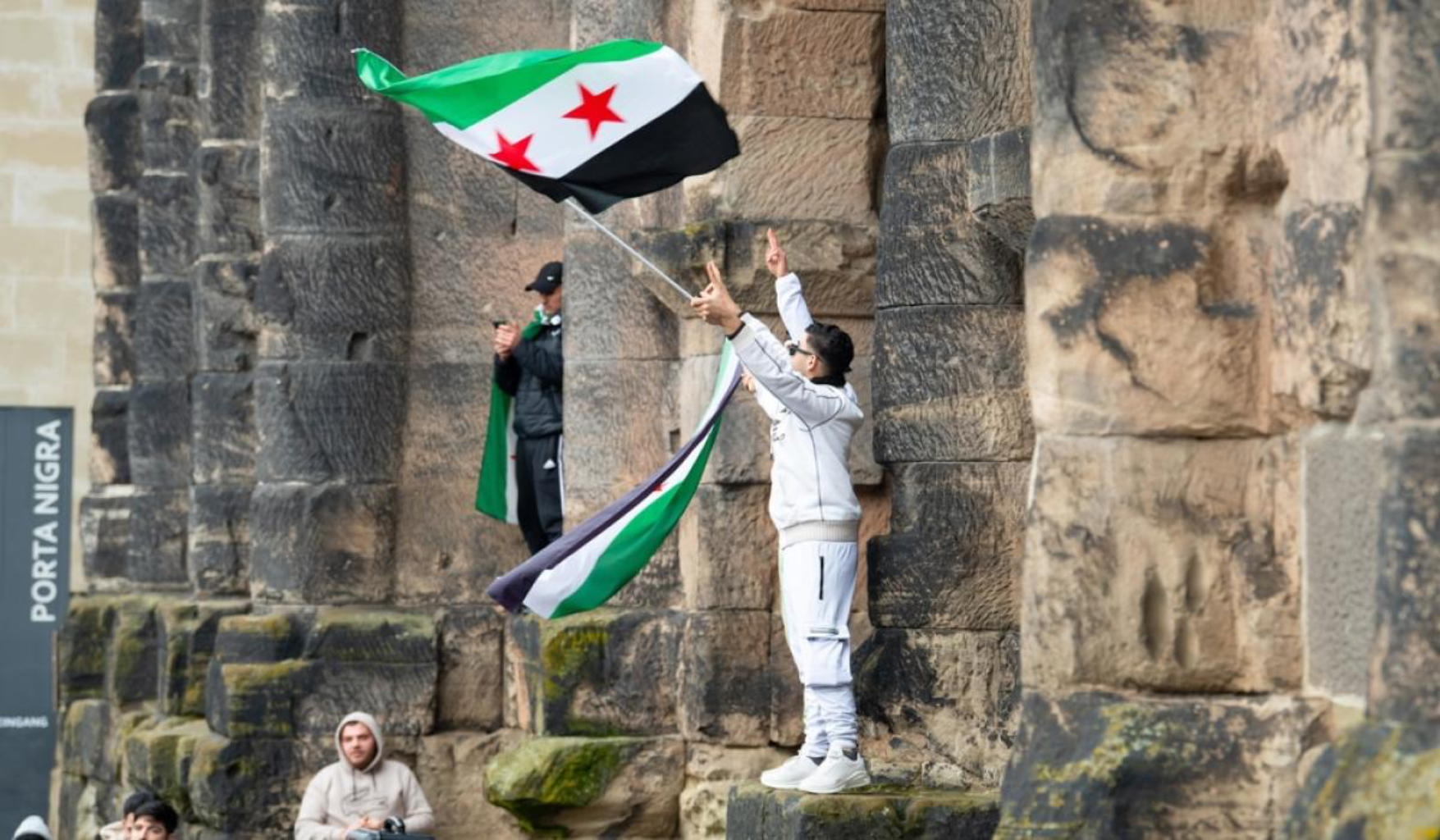
Causing Mixed Feelings: The Fall of the Assad Regime and the Gulf States.

The fall of the Syrian regime of Bashar al-Assad sent both shockwaves and hope throughout the region and beyond. As several oppositional groups – such as the leading Islamist Hayat Tahrir ash-Sham (HTS) – have seized power in all parts of the country and al-Assad has fled to Russia, the world is watching carefully how the transitional process from the Assad regime to a new political system will unfold.
In particular, neighbouring states such as the Gulf monarchies are assessing the collapse of al-Assad with mixed feelings. For them, al-Assad’s brutal crackdown on his population, his cruel dictatorship, his close ties to Iran, and his support for Hezbollah resulted in a nadir of relations for years. Except for Oman, the other Gulf states cut diplomatic ties with the Assad regime, expelled Syria from the Arab League (AL) in November 2011 and started to provide technical and financial assistance to a number of different Islamist and jihadist rebel groups.
Normalisation with al-Assad: no unified Gulf position
Relations slowly began to improve from 2018, resulting in the reintegration of Syria into the Arab League (AL) in 2023 after 12 years of Syrian isolation. This decision meant a turnaround in Gulf states’ relations with Syria since the war started in 2011. The motivations for normalisation – mainly pushed by the United Arab Emirates (UAE), Jordan, and Oman – with Syria were manifold as Gulf states needed to preserve regional stability in light of ongoing economic diversification. After the devastating earthquake in spring 2023 that hit parts of both Syria and Turkey, Gulf states channelled humanitarian assistance to Syria as a form of ‘earthquake diplomacy‘ and prepared for official normalisation.
The catastrophe gave the Gulf states a ‘golden opportunity‘ to enter into political dialogue with al-Assad through humanitarian aid. The UAE and Bahrain, for instance, channelled assistance to regime-controlled areas, whereas Qatar and Kuwait only supported areas outside of regime control. Finally, Saudi Arabia took a nuanced approach and supported both regime-controlled and non-regime-controlled areas with assistance.
As indicated by the different aid strategies after the earthquake, the Gulf monarchies were far from unified in their approach to Syria, with significant polarisation persisting on the issue. As part of its general approach of geopolitical pragmatism, the UAE considered normalisation with al-Assad as an opportunity for political networking with Russia and economic diversification. Conversely, Abu Dhabi wanted to offer Syria an alternative for its close relations with Iran. Originally, the UAE was strongly opposing the Assad regime soon after the outbreak of the war, but it shifted its position towards open rapprochement.
In 2018, the UAE reopened its embassy in Damascus, and in November 2021, UAE’s Foreign Minister Abdullah Bin Zayed al-Nahyan visited Syria. At the 2020 Dubai Expo, Syria was represented by an official delegation that included Economy and Foreign Trade Minister Mohammad Samer al-Khalil, and Assistant Foreign and Expatriates Minister Ayman Sousan. Finally, in March 2022 and one year later, Bashar al-Assad met with UAE’s President and Crown Prince Muhammad bin Zayed in the UAE – significant steps in UAE’s reconciliation efforts. Some days before al-Assad’s fall, it was reported that the Emirati leadership and the United States discussed lifting sanctions against Syria in case al-Assad would reduce cooperation with Iran and stop weapon deliveries to Hezbollah.
Based on the (mis-)calculation that al-Assad has consolidated his power across the country, the UAE seized the opportunity for market access as Syria was considered an attractive investment location. For instance, the Syrian Emirati Joint Businessmen Council was established in October 2021. In 2020, exports from the UAE to Syria amounted to USD 750 million, mainly products from Iran and China channelled through Dubai. The UAE and al-Assad also planned to develop a 300-megawatt PV solar project station in Widyan al-Rabie near Damascus. Despite signed agreements, however, the project was not finalised. At the same time, the Emirati political leadership considered al-Assad as a bulwark against Islamism.
For Saudi Arabia, normalisation with al-Assad was mainly driven by pragmatism. Under Bashar’s father, then-President Hafez al-Assad, who died in 2000, Saudi Arabia and Syria were closely coordinating efforts when Iraq’s Saddam Hussein invaded Kuwait in 1991. At that time, Hafez responded to the request by sending Syrian forces to participate in the coalition. In turn, Saudi Arabia engaged with the US to remove Syria from the terrorist list – without success.
When Bashar al-Assad came to power, Saudi-Syrian relations deteriorated as al-Assad was accused of ordering the killing of the Saudi-Lebanese business tycoon Rafik al-Hariri in 2005. After the outbreak of the Syrian war, competition between Saudi Arabia and Qatar intensified as both supported opposing rebel groups. By nominating the popular Prince Bandar bin Sultan as the head of intelligence in July 2012, Saudi Arabia therefore changed its support strategy from a ‘leading from behind’ approach to a more assertive ‘leading from the front’ stance in the war.
Later on, the kingdom started to support the Salafi Jabhat al-Islamiyah (Islamic Front) in its fight against al-Assad. However, Saudi engagement in Syria shrank after the kingdom started its campaign in Yemen in 2015, which absorbed most of its military capacities. With Russia entering the Syrian war in 2015, Saudi Arabia reduced its engagement even more to stay out of regional conflicts and geopolitical powerplay and promote its ‘Saudi first’ nationalist approach of economic diversification under the new leadership of King Salman and his son Crown Prince Muhammad bin Salman. In light of such socioeconomic strategy, Riyadh’s anti-Assad position shifted to a pragmatic course of conflict management, resulting in the AL reintegration.
In doing so, Saudi Arabia was expecting the Assad regime to stop drug trafficking from Syria via Lebanon into the kingdom. In times of international sanctions, Syria’s regime established itself as a narcostate: it was estimated that the drug trade generated revenues for the Syrian regime around USD 5 billion per year. In particular, captagon was produced in more than 40 captagon production facilities close to the Jordanian and Lebanese borders. Through Lebanon, the pills are smuggled to Saudi Arabia. There, captagon is causing serious challenges for the Saudi population: it is said that most captagon consumers in the region are located in the kingdom.
Qatar, in turn, took the opposite position. In July 2011, soon after the escalation of violence in Syria, Qatar had already cut diplomatic relations with the Assad regime. Since then, it has supported various anti-Assad groups to gain leverage on Islamist forces on the ground and provide assistance to the Syrian opposition. In contrast to the UAE, Doha kept its anti-Assad position throughout the conflict and even distanced itself from Syria’s reintegration into the AL.
Other Gulf states, namely Oman, found themselves in an in-between position: Oman, traditionally serving as a conflict mediator and facilitator, kept diplomatic relations with al-Assad and engaged with him before the official normalisation, as part of its ‘Omani-balancing‘ approach. For instance, it was the first Gulf state that sent its ambassador, Turki bin Mahmood al-Busaidi, back to Syria in October 2020. Notably, Oman’s then-foreign minister Yusuf bin Alawi had already visited Damascus in 2015 and 2019. In February 2023, al-Assad travelled to Oman and met with Sultan Haitham bin Tariq.
Throughout the conflict, Oman refused to support oppositional groups and did not call for regime change. As Oman finds itself in a strategically volatile position and needs to keep pragmatic ties with both Gulf neighbours and Iran, it was not interested in taking a clear anti-Assad position. As part of this ‘talk-to-everyone’ approach, Oman also pushed for Syria’s reintegration into the AL.
This divergence in their stance on normalisation with al-Assad underscored that the Gulf monarchies are not a monolithic entity, but instead held an ambivalent perspective on the Syrian conflict. As a consequence, the Gulf states’ normalisation with the al-Assad regime in Syria presented a double-edged sword. On the one hand, countries like Saudi Arabia, Oman, and the UAE were advocating for normalisation to enhance regional security, curb drug trafficking and foster economic collaboration.
This approach aligns with their broader trend of regional de-escalation and reconciliation, driven by pragmatic opportunism and a focus on business and security interests. Their goal was to reduce regional tensions, manage conflicts and balance power dynamics in a multipolar world. However, the al-Assad regime had increasingly become a point of contention for most of the Gulf monarchies, as neither the Emirati nor the Saudi aspirations to find common ground with al-Assad materialised. Business deals remained limited, and captagon trafficking did not stop. In a nutshell, expectations were not met, which resulted in growing frustration with al-Assad in Abu Dhabi and Riyadh.
Al-Assad’s fall: Gulf concerns of growing regional instability
Despite diverging strategies on al-Assad in previous years, the rapid collapse of his regime took all players – including the Gulf states – by surprise. The short- and long-term ramifications are likely to deeply impact their political consideration. In general, all Gulf states agree that the fall of the al-Assad regime could pose a threat to regional stability. Hence, their statements strongly emphasise the need to preserve territorial Syrian integrity. Interestingly, the official statements indicate the different positions on Syria: whereas the UAE expressed its concern with growing extremism and terrorism, Qatar welcomed the fall of al-Assad and appreciated the efforts of the different oppositional forces.
Saudi Arabia, Oman and others took a more nuanced tone. Saudi Arabia and the UAE, in particular, fear an ‘Iraq‘ or ‘Libya failed state’ scenario in which militant jihadist groups and other armed actors enter into internal violent clashes which could result in a bloody civil war. In their view, such a scenario would further jeopardise regional stability and thus also undermine the national goals of economic diversification and regional de-escalation. In particular, Abu Dhabi's strategy of creating stability through investment is being put to the test following the fall of al-Assad. Ideologically, the strengthening of Islamist ideas could also threaten the interpretative sovereignty of the Gulf monarchies.
Iran: weakening of ‘Axis of Resistance’
On a regional level, the fall of al-Assad is also perceived in the Gulf as a weakening of Iranian influence in the region. In light of ongoing Israeli military action against Hamas and Hezbollah, Iran’s ‘Axis of Resistance’ is in decline, which also limits Tehran’s capacity to exert leverage on regional proxies. At the same time, however, the Gulf states show no interest in provoking Iran or joining an anti-Iranian alliance under Trump and with Israel. Instead, it is to be expected that the gradual and tactical rapprochement with Iran will continue. The loss of its most important Arab ally could force the Iranian leadership to provide some proxies (Hezbollah, Hamas) with even less material and non-material support, which was and is an important goal of the Gulf states' rapprochement with Iran, especially for Saudi Arabia.
However, it seems likely that Iran could invest more in still functioning proxies such as Shiite militias in Iraq or the Houthis in Yemen, which could spur regional escalation and undermine Gulf security interests. Therefore, mainly Saudi Arabia and Kuwait are concerned about spill-over effects on Iraq caused by growing Syrian destabilisation. The potential resurgence of jihadist forces could also affect the fragile situation in Iraq and inspire militant actors there.
Such a scenario would also impact the Gulf states’ economic and security policy relations with Iraq, which is becoming increasingly important in terms of energy and economic cooperation. Finally, Israel’s seizure of the buffer zone in Golan Heights, combined with air strikes on Syrian targets, is viewed with concern in the Gulf and was criticised by Qatar and Saudi Arabia. In principle, the Gulf states risk that Israeli action could exacerbate regional tensions (particularly with Iran), which would run against their own economic and security interests.
What comes next? Potential for Gulf engagement in a post-Assad Syria
The current situation provides chances and challenges for enhanced Gulf engagement in a post-Assad Syria. On the one hand, potential remains limited as several players are following diverging strategies and interests. In particular, Qatar and the UAE have taken different approaches in recent years towards the al-Assad regime and now need to adjust to the new situation. Furthermore, the incoming Trump administration constitutes a black box regarding US engagement in Syria. Trump already stated that he will stay out of the Syrian file, which could provide a carte blanche for Israel to fill the current power vacuum – a concerning scenario for the Gulf states.
On the other hand, inner-Gulf coordination and extensive dialogue with Iran or Turkey could result in concrete action regarding reconstruction with the new political forces inside Syria. Here, Gulf states such as Oman could facilitate dialogue and engagement. Saudi Arabia is particularly concerned that growing chaos inside Syria could result in ongoing drug trafficking to the kingdom. It therefore seems likely that Saudi Arabia will take a position of strategic passivity by talking with all the involved actors and adjust to new realities on the ground.
In the course of regional political de-escalation efforts, the Kingdom will push for reconciliation by offering itself as a mediator. Improved relations with Turkey could be just as helpful in this regard as the more pragmatic approach to different Islamist movements compared to the UAE. Definitely, the Saudi priority remains economic diversification, for which regional stability is needed in order to strengthen the country's business model.
For Qatar, al-Assad’s collapse provides an opportunity for enhanced mediation and facilitation. It has already stated that it will start an open dialogue with all Syrian forces – particularly with HTS, which Qatar’s foreign affairs ministry spokesperson Majed al-Ansari described as a potential ‘reasonable and rational player’ in the future. Doha also hosted a meeting of the Astana group together with officials from Russia, Iran, and Turkey, as well as Geir O. Pedersen, the United Nations special envoy for Syria. In addition, the Saudi Minister of Foreign Affairs, Prince Faisal bin Farhan, participated in the event. In doing so, the leadership in Doha could present itself as a supporter of the Syrian people and, with its conciliatory stance towards Islamist groups, gain new opportunities to exert influence in Syria in the future. The intensified relations with Turkey since the Gulf crisis will also help in this regard. Finally, the Gulf Cooperation Council (GCC) also announced a statement calling for Syria’s territorial integrity.
Driven by pragmatism: preserving regional stability
Those actions illustrate that all Gulf states harbour serious interest in regional stability and national security. As a consequence, they will take a pragmatic approach by dealing with Islamist groups in Syria and powerful potential external spoilers such as Iran and Turkey to find a modus operandi. In the long run, Gulf states – particularly the UAE and Saudi Arabia – consider Syria an attractive market and potential partner for economic diversification and investments, including reconstruction. Syria can therefore benefit from the support of its Gulf Arab neighbours – but only if the new government proves that it can achieve stability and build inclusive state structures.
Other Researches