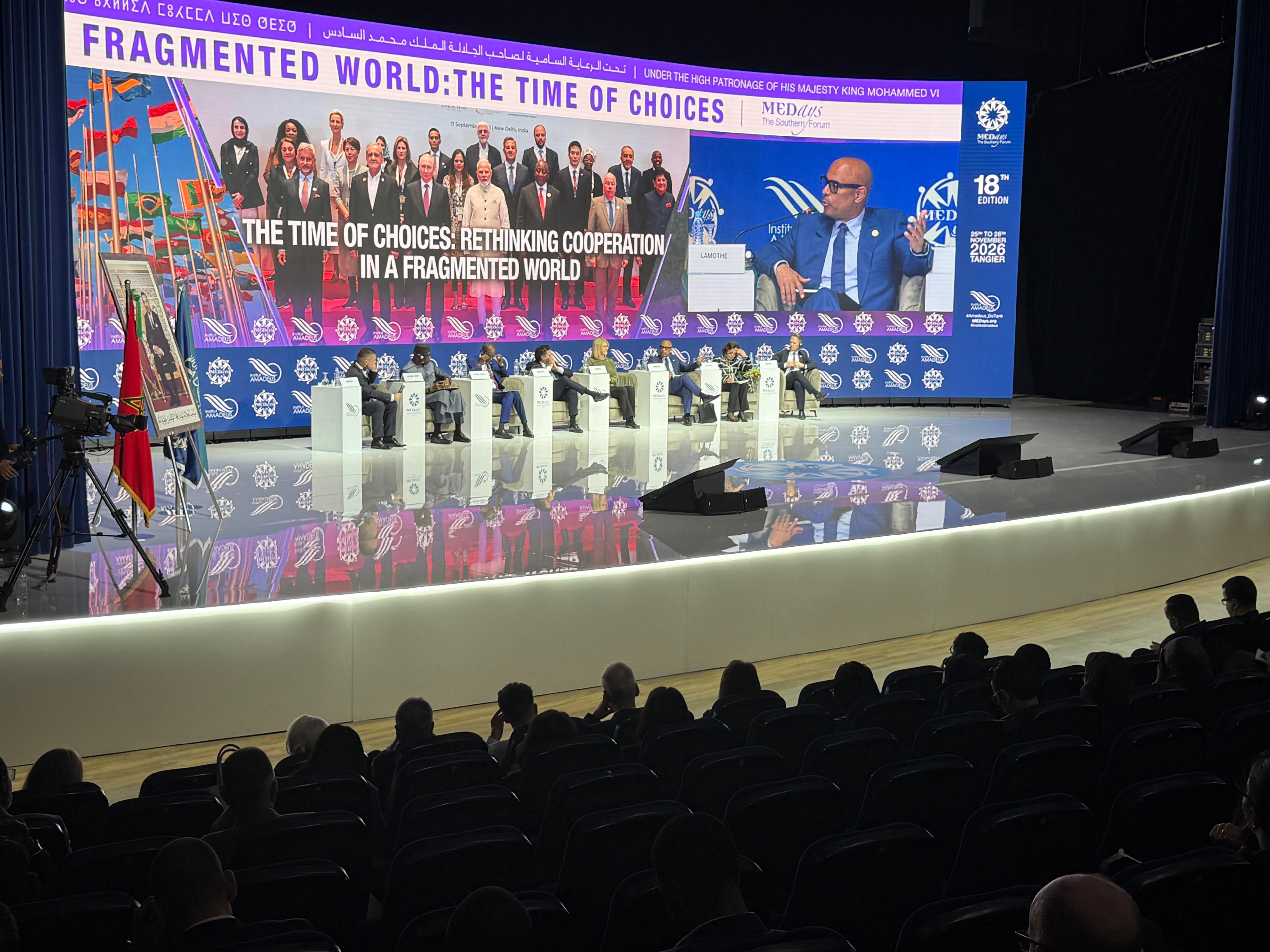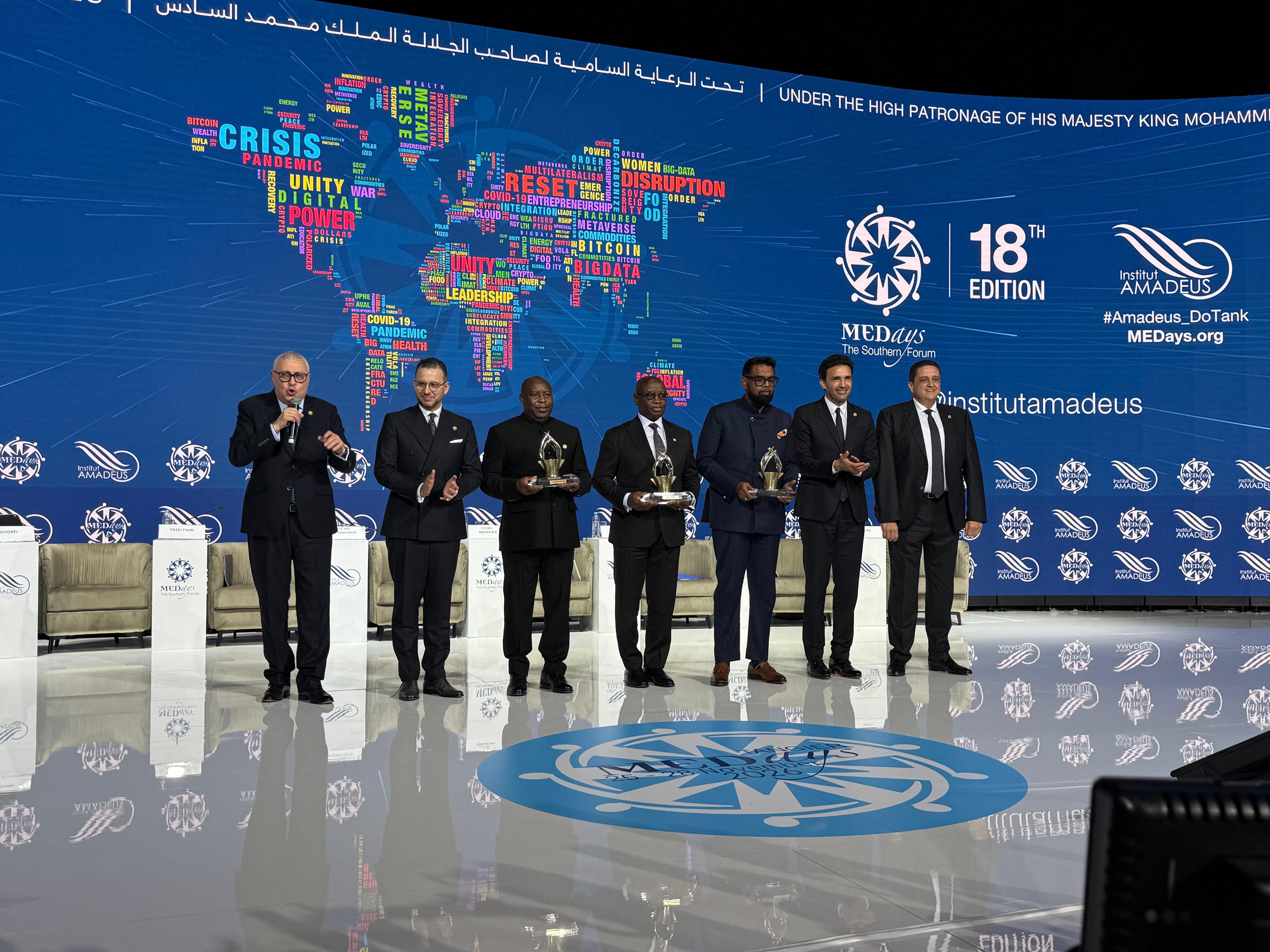
Brussels International Center Addresses Disinformation and Public Trust at MEDays 2026
The Brussels International Center (BIC), represented by its Director, Dr. Ramadan Abu Jazar, contributed to the third day of MEDays 2026 in Tangier through a discussion on narrative sovereignty, information warfare and the protection of public trust. Organised by the Amadeus Institute, the forum provided a setting for examining how political competition and technological change are reshaping the international information environment.
Information Warfare and the Struggle for Credibility
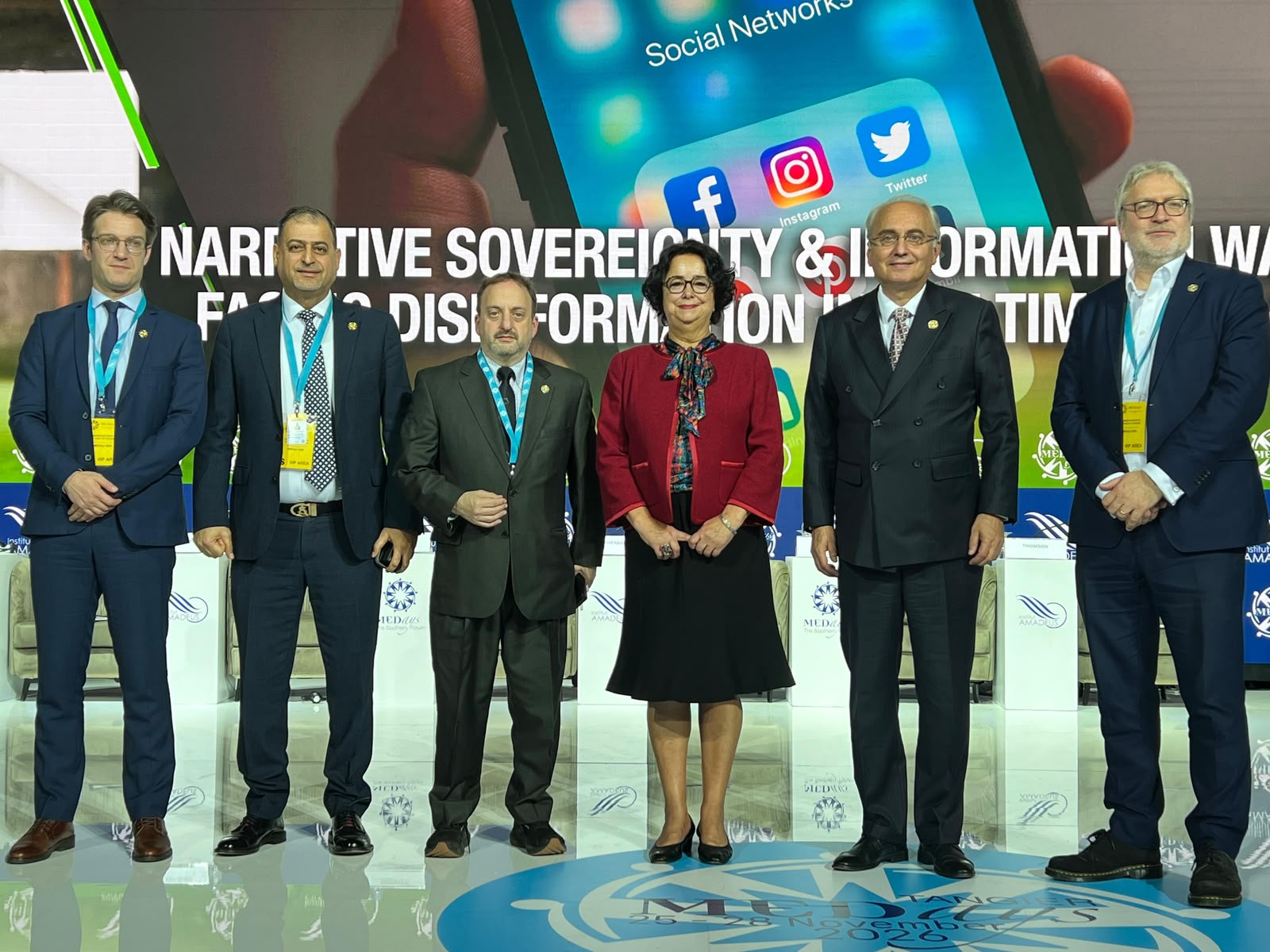
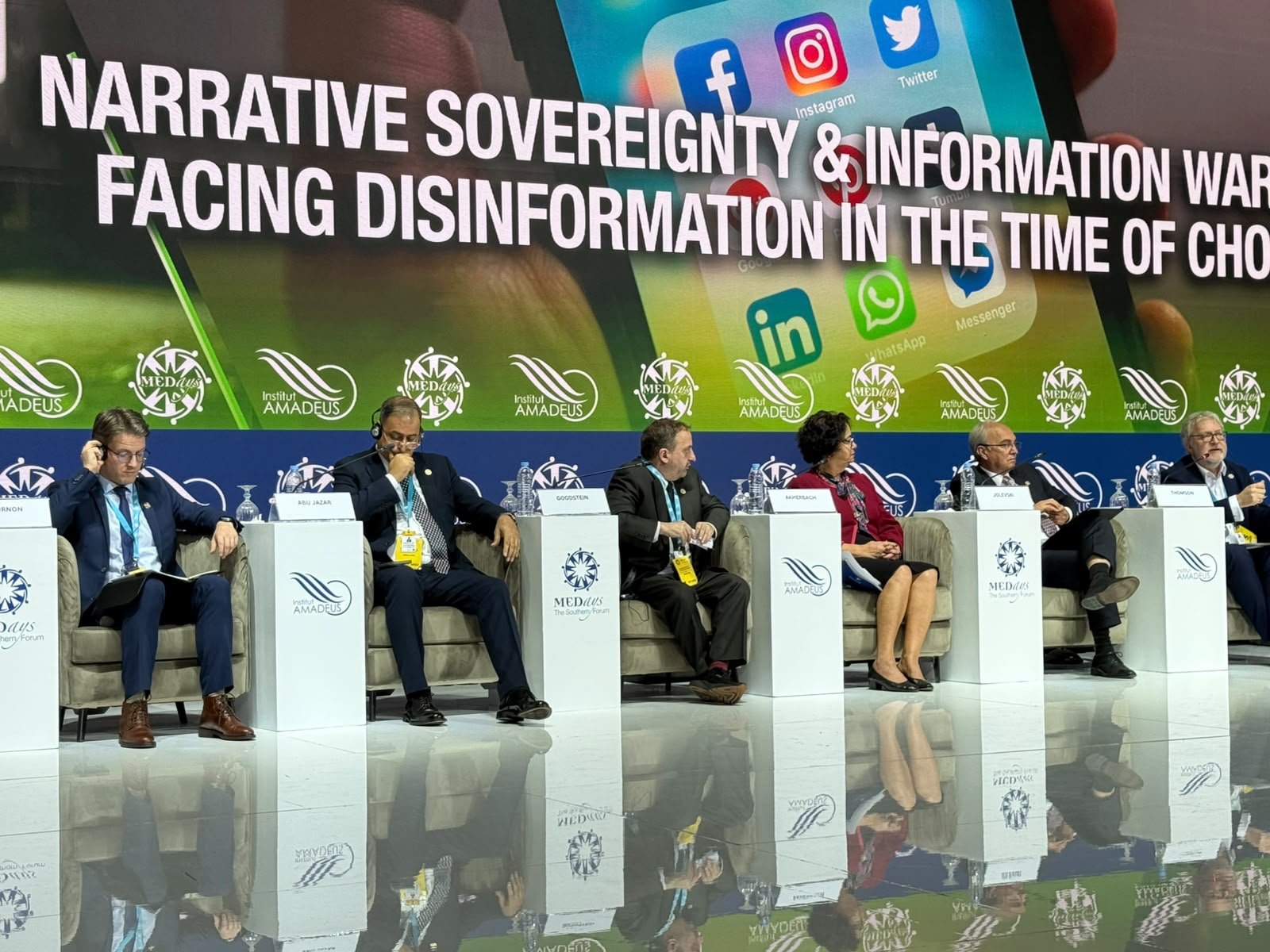
Speaking during the panel “Narrative Sovereignty & Information Warfare: Facing Disinformation in the Time of Choices,” Dr. Abu Jazar examined the relationship between misleading information, political rivalry and institutional credibility.
He shared the platform with Latifa Akherbach, Zoran Jolevski, Scott Goodstein and Dr. Stuart Thomson, in a discussion moderated by Thomas Dournon. Their exchange placed the challenge of disinformation within a broader debate about how institutions communicate and how citizens assess competing accounts of events.
Dr. Abu Jazar’s contribution brought BIC’s research and human rights perspective to a question with direct implications for public life. When information becomes a means of political confrontation, the consequences extend to confidence in institutions and the ability of citizens to make informed decisions.
The American Example and Political Polarisation
Drawing on the American experience, Dr. Abu Jazar discussed how allegations of falsification and attempts to influence public opinion become entangled with domestic political conflict. He highlighted the use of accusations against political opponents, illustrating the difficulty citizens face when assessing claims within a polarised information environment.
His example raised a question about the relationship between disinformation and political competition. When rival actors challenge each other’s credibility, the public must navigate both the underlying claims and the political interests surrounding them. This can make establishing a shared understanding of events increasingly difficult.
The significance of his intervention lay in connecting the circulation of misleading content with the wider struggle over public trust. It encouraged consideration of how institutions can communicate credibly when their own authority is being contested.
European Responses and Institutional Preparedness
Dr. Abu Jazar also referred to the European Union’s response to disinformation. He noted that European institutions had recognised the risks to democratic life and developed mechanisms, including within the external affairs sphere, to address them. In his assessment, those efforts had yet to achieve their intended objectives.
He called for a specialised mechanism to document and verify information and make reliable findings accessible to the public. His proposal addressed the growing difficulty of assessing online content, particularly as artificial intelligence facilitates the production of convincing fabricated videos and other misleading material.
This contribution gave the discussion a practical institutional focus. The challenge concerns how to establish a dependable channel through which verified information can reach citizens, and how to build the credibility required for that information to be trusted.
Digital Sovereignty and Shared Security
The wider programme on 27 November placed these questions alongside discussions of technology, international security and economic transformation. A session on “The Politics of Technology in a Fragmented World” addressed artificial intelligence, blockchain and digital sovereignty. Another examined “Europe–Africa–Mediterranean: Shared Security or Shared Vulnerabilities?”
Together, these themes offered a broader context for BIC’s contribution. Questions about public narratives are connected to the technologies through which information circulates, while international cooperation depends partly on how societies understand shared interests and risks. The day’s programme created opportunities to consider these relationships across different policy fields.
Strengthening BIC’s International Engagement
BIC extends its appreciation to the fellow panellists and moderator, and to Brahim Fassi Fihri and the Amadeus Institute team for organising MEDays 2026. For the Brussels International Center, the day combined a substantive contribution to the debate on disinformation with opportunities to exchange perspectives and develop relationships across political, diplomatic and research communities. Dr. Abu Jazar’s participation strengthened the Center’s engagement with questions linking institutional credibility, technological change and international cooperation, while the wider discussions in Tangier provided valuable context for its continuing research and dialogue.
Other Researches