Press Release – Side Event at the UN Human Rights Council on the Humanitarian Implications of the Shutdown of the Strait of Hormuz
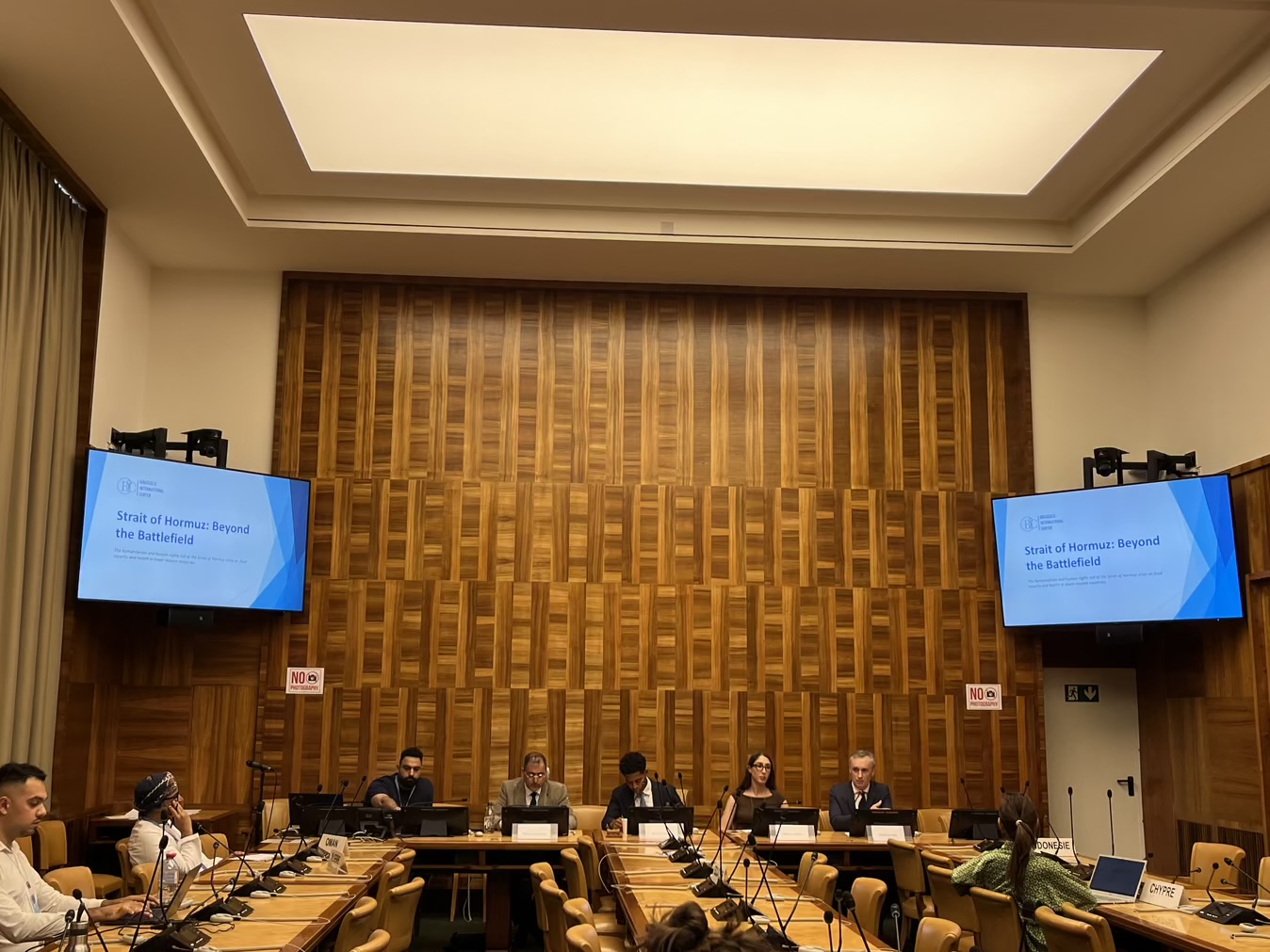
Geneva, June 19, 2026 – On the margins of the 62nd session of the UN Human Rights Council, the Brussels International Center for Research (BIC) hosted a side event in Room IX titled “Beyond the Battlefield: The humanitarian and human rights toll of the Strait of Hormuz crisis on food security and health in lower-income countries.” The discussion examined the humanitarian, economic, and legal consequences of ongoing disruptions to maritime traffic through the Strait of Hormuz, a critical global shipping corridor. The event drew on a report by the UK Foreign, Commonwealth & Development Office warning that an additional 45 million people could fall into acute food insecurity if the conflict does not end by the middle of this year, based on data from the UN World Food Programme.
Panelists warned that reduced commercial transit is increasingly affecting global supply chains, with direct consequences for food security and public health in lower-income and import-dependent countries. Particular concern was raised over disruptions to the transport of key inputs and commodities essential to the functioning of global food systems, with speakers noting that these bottlenecks are compounding existing vulnerabilities and placing additional strain on already fragile food systems in lower-income countries. Delays in medical supply chains were also highlighted, undermining access to essential medicines and humanitarian assistance.
Several speakers stressed the broader geopolitical dimensions of the crisis, with some panelists explicitly emphasizing the role of Iran in the disruption of navigation in the Strait. Concerns were also raised regarding reported strikes affecting civilian infrastructure in neighbouring Gulf states. The event concluded with calls for stronger international cooperation to ensure freedom of navigation, uphold international humanitarian law, and address accountability while seeking diplomatic solutions to the crisis. The discussion was attended by representatives of several consulates and international organizations, reflecting sustained diplomatic and institutional interest in the issue.