Event“Memory, National Solidarity, and Democratic Resilience in the Face of Terrorism” - Friday, March 20, 2026 – Brussels
Friday, March 20, 2026 – Brussels
Organized by the Brussels International Center
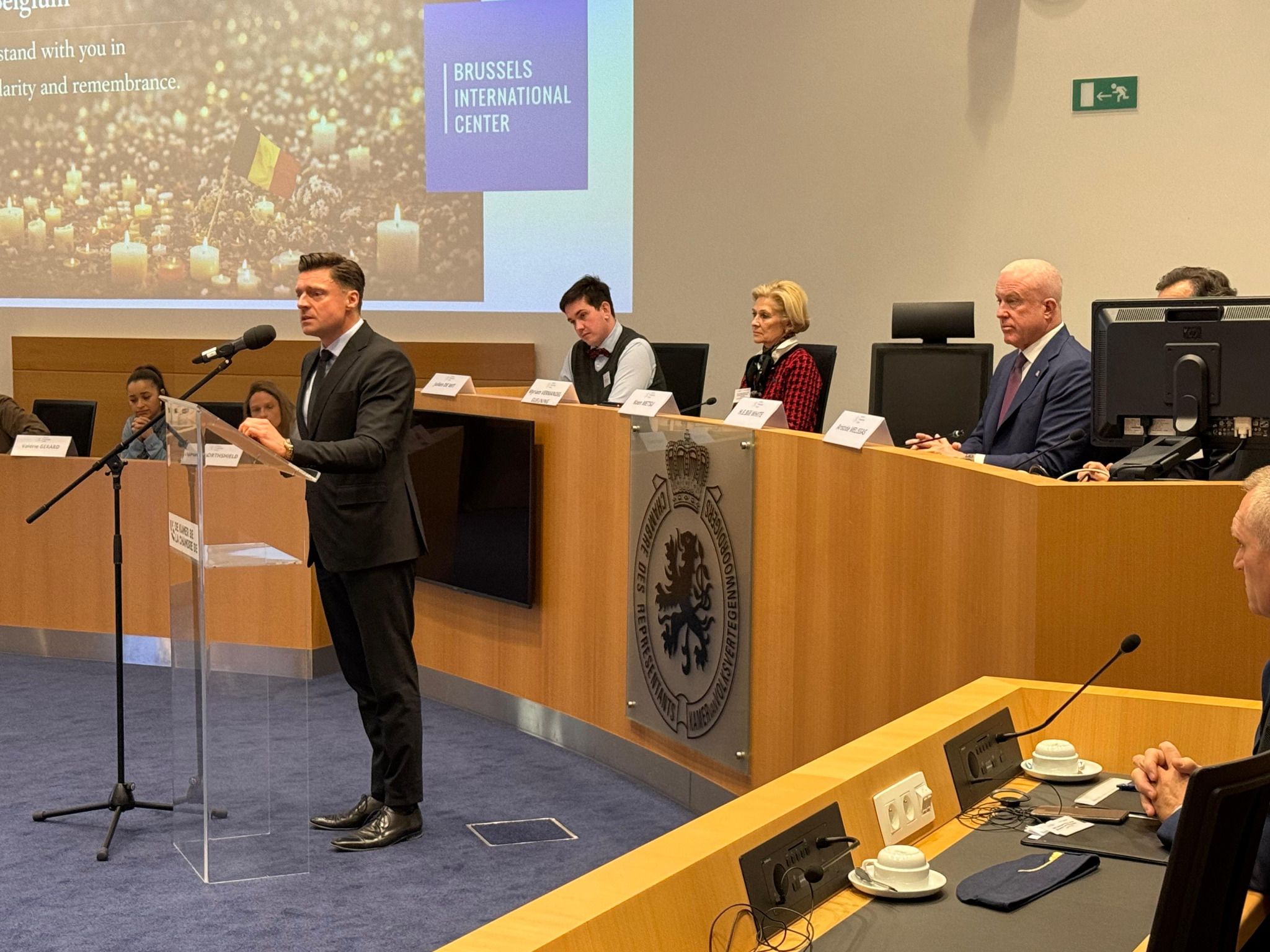
The commemoration brought together policymakers, 16 diplomatic representations, first responders, victims, and civil society representatives. It aimed to reflect on the impact of these attacks, assess progress in counterterrorism and victim support, and renew commitments to solidarity, justice, and remembrance.
Key Themes
1. Transatlantic Solidarity and Cooperation
The U.S. Ambassador to Belgium, Bill White, emphasized the enduring partnership between Belgium and the United States in responding to terrorism. Recalling the global impact of the September 11 attacks, he highlighted how moments of crisis have historically strengthened international cooperation.
Particular emphasis was placed on intelligence-sharing efforts between Belgian and U.S. authorities following the Brussels attacks. These were described as among the most extensive joint operations undertaken by the two countries, contributing to the identification and prosecution of perpetrators, including convictions delivered in 2023.
Ambassador White paid tribute to the victims, including American nationals affected by the Brussels and New York attacks, as well as dual citizen survivor Karen Northshield, who was present in Zaventem at the time of the attack, and he also recognized the bravery of first responders.
2. Remembering Victims and Supporting Survivors
A central focus of the event was the lived experience of victims and survivors. Testimonies by Aristide Melissas, Karen Northshield, and Valérie Gérard (who lost her niece in the Maelbeek attack) highlighted the long-term physical, psychological, and administrative challenges faced in the aftermath of terrorist violence.
Several speakers emphasized that, for many victims, the trauma remains ongoing. Survivors described continued struggles for official recognition, access to compensation, and adequate psychological support. Administrative procedures were often characterized as lengthy and burdensome, with some cases still unresolved years after the events.
Legal representatives and victim advocacy groups, such as Life for Brussels lawyer Valérie Gérard and victims’ representative Myriam Vermandel, stressed the need for more consistent and structured support systems. Proposals included improving compensation mechanisms, simplifying administrative processes, and ensuring sustained assistance for victims and their families over time.
3. The Role of the State and Public Institutions
Speakers from political and institutional backgrounds reflected on the responsibilities of the state in both preventing terrorism and supporting victims. While progress was acknowledged—particularly in terms of security coordination and judicial outcomes—several interventions underscored remaining gaps in victim care.
Concerns were raised regarding the adequacy of follow-up measures, both for victims and for individuals identified as having been radicalized. Participants called for strengthened monitoring systems and more comprehensive long-term policies.
At the same time, the importance of maintaining social cohesion was highlighted. References were made to the need for inclusive approaches that reinforce trust between institutions and communities.
4. Community, Unity, and Memory
Across interventions, there was a shared emphasis on unity, compassion, and collective responsibility. Speakers stressed that the response to terrorism must extend beyond security measures to include social solidarity and remembrance.
The role of communities, including civil society and local actors, was recognized as essential in both preventing radicalization and supporting victims. Several speakers highlighted how Muslim communities in Belgium have actively distanced themselves from extremist violence and contributed to broader efforts against radicalization.
The importance of memory and recognition was also underscored. Honoring victims and first responders was presented as a fundamental component of national resilience, with calls for more sustained efforts to preserve collective memory.
Conclusion
The commemoration served as a moment of reflection on the enduring consequences of terrorist attacks and the progress made over the past decade. While significant achievements were noted—particularly in international cooperation and judicial accountability—the event highlighted the need for continued efforts to support victims and strengthen institutional responses. Ultimately, the discussions converged on a shared message: the fight against terrorism is not only a matter of security, but also of solidarity, justice, and long-term care for those affected. Renewing commitments to these principles remains essential for building resilient and cohesive societies.