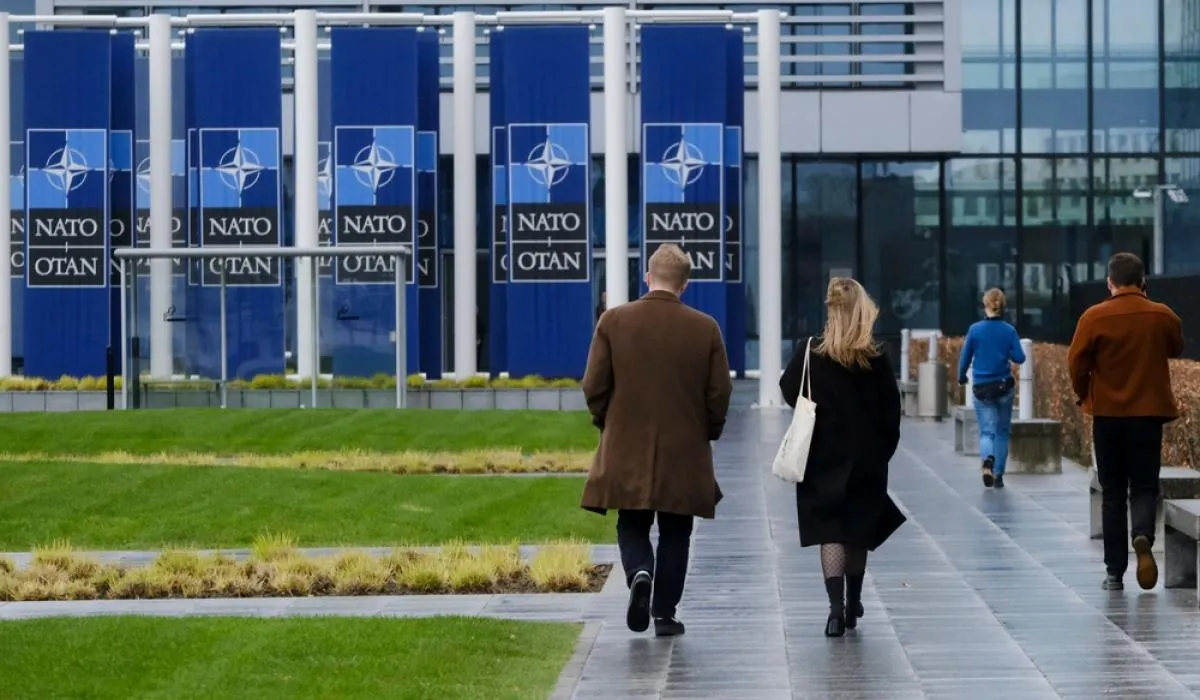
Reinventing NATO: Strategic Imperatives for the 2024 Summit


Download PDF Version here
As NATO leaders converge in Washington, D.C. for the 75th anniversary summit, the Alliance faces a pivotal juncture. Intended to bolster confidence among leaders, the Summit is currently being overshadowed by uncertainties regarding President Biden's potential bid for a second term and the implications of a possible Donald Trump return to the presidency. Concerns about future U.S. foreign policy and its impact on NATO's cohesion and strategy loom large as these political questions remain unanswered.
Confronting simultaneous threats from an increasingly assertive Russia, the rise of China, and global technological disruptions, the urgency to innovate in defense and security strategies is paramount. This op-ed outlines actionable recommendations for NATO leaders to navigate the complexities of modern geopolitical challenges through enhanced defense spending, technological innovation, and dynamic diplomatic strategies.
Unifying European Strategy and Defense Amidst Geopolitical Tensions and Rising Nationalism
The NATO summit, overshadowed by the looming prospect of Donald Trump's potential return to the White House, was marked by an atmosphere of fear and insecurity. Concerns about the U.S. potentially questioning or even withdrawing from NATO cast a pall over the discussions, as leaders grappled with the implications for the alliance's future stability and cohesion.
The recent developments in Europe highlight a critical need for Europeans to adopt a more cohesive and strategic posture in response to emerging conflicts, particularly in the context of the Ukrainian war. The evolving EU-Georgia relationship serves as a case in point, reflecting broader issues within the European Union's foreign policy and defense strategies.
One of the main challenges facing Europe is the lack of a united and sensible attitude towards the Ukrainian conflict. Despite the shared threat posed by Russian aggression, European countries have yet to fully synchronize their responses. This disunity hampers their ability to present a formidable front and undermines efforts to support Ukraine effectively. A united stance is crucial not only for deterring further Russian advances but also for maintaining the credibility and stability of the European Union as a geopolitical entity.
The arms race with Russia is intensifying, necessitating a robust and well-coordinated European defense strategy. As the United States signals a potential shift away from its traditional role as the indispensable ally, European nations must prepare to shoulder more responsibility for their own security. This includes increasing defense budgets, enhancing military capabilities, and fostering greater interoperability among European armed forces. The EU's current reliance on NATO, while still vital, must be complemented by stronger European defense initiatives to ensure preparedness for any future conflicts.
Compounding these issues is the rise of right-wing nationalism across Europe, which echoes the Trumpist worldview. This trend poses a significant threat to the cohesion of the European Union and its collective security efforts. Nationalist movements often prioritize domestic agendas over collaborative security measures, leading to fragmented and inconsistent policies. Moreover, the alignment with Trumpist ideals, which frequently criticize multilateralism and international cooperation, could weaken Europe's strategic alliances and undermine the solidarity required to face common threats.
Furthermore, Europe must enhance its strategic autonomy by investing in its own defense capabilities and reducing dependence on external allies. This does not imply severing ties with the United States but rather complementing NATO's efforts with a robust European defense framework. Such a shift would enable Europe to respond more effectively to regional threats and contribute more substantially to global security.
Embrace Technological Transformation
To maintain strategic superiority, NATO must fully integrate emerging technologies into its defense architecture. The lessons from Ukraine have demonstrated the critical impact of technologies like unmanned vehicles, additive manufacturing, low-Earth-orbit satellites, and artificial intelligence on the modern battlefield. For instance, unmanned aerial and maritime vehicles have proven their worth in intelligence collection, attack missions, and logistical support.
The Washington summit should prioritize embedding these technologies within NATO's Defense Planning Process (NDPP). Specific capability targets for intelligence, surveillance, reconnaissance, and communications should be established. Initiatives like the Defense Innovation Accelerator for the North Atlantic can serve as a catalyst for scaling up critical emerging technologies across member states. Moreover, establishing a comprehensive framework for research and development, acquisition, and operational deployment of these technologies will ensure NATO's preparedness against any adversary.
Engage Private-Sector Capabilities
The evolving nature of modern warfare necessitates a shift from a state-centric military model to a more inclusive approach that leverages private-sector expertise. Cybersecurity, critical infrastructure resilience, and wartime communications are key areas where private companies can provide indispensable support. NATO should formalize partnerships with high-end cybersecurity firms and communications companies, particularly those operating low-Earth-orbit satellites. Such partnerships will bolster wartime effectiveness and ensure the resilience of critical infrastructures like air, rail, ports, electric grids, and pipelines.
Additionally, NATO nations should enhance their cyber defense capabilities by creating national cybersecurity civilian reserve corps. This initiative would allow for a rapid surge in cybersecurity personnel during conflicts, ensuring robust defense mechanisms across the Alliance. The "hunt forward" model employed by U.S. Cyber Command, which offers defensive capabilities to nations with less expertise, should be expanded and adopted by other member states to provide continuous support and build intra-allied capacities.
Increase Defense Spending and Efficiency
Despite ongoing efforts, defense spending among NATO members remains inconsistent. Leaders must commit to not only meeting but exceeding the 2% GDP benchmark for defense spending. Efficient allocation of resources is crucial, with a focus on multi-domain operations and the protection of critical undersea infrastructure such as cables and pipelines. Establishing an international undersea infrastructure protection corps that combines governmental and private efforts can ensure resilience and rapid repair capabilities.
The Alliance must also modernize its logistics and supply chains to enhance its rapid response capabilities. This includes adopting new technologies like additive manufacturing for critical parts and low-Earth-orbit satellites for real-time intelligence and communication. By doing so, NATO can maintain its operational edge and ensure that all member states are capable of responding swiftly and effectively to emerging threats.
Strengthen Diplomatic Engagement
Diplomatic innovation is as critical as military strength. NATO must expand its network of partnerships, particularly in the Indo-Pacific region and with international organizations like the European Union and the United Nations. Enhancing cooperation with like-minded nations will reinforce the rules-based international order. Public diplomacy efforts are also essential to counter disinformation and promote a unified narrative. Platforms like the NATO Public Forum can engage diverse stakeholders and foster a better public understanding of NATO’s mission.
In addition, NATO should explore out-of-the-box diplomatic solutions to ongoing conflicts and tensions. For instance, leveraging digital diplomacy to engage younger, tech-savvy populations in member and partner countries can help build long-term support for NATO’s objectives. Innovative diplomatic initiatives, such as climate security cooperation and joint humanitarian missions, can also enhance NATO's global standing and foster goodwill among non-member nations.
Reinforce Support for Ukraine
Supporting Ukraine in its defense against Russian aggression remains a top priority for NATO. The Alliance must solidify its assistance programs, ensuring Ukraine can sustain its defense efforts. This includes providing advanced military aid, intelligence support, and facilitating Ukraine's eventual membership in NATO. Establishing the NATO-Ukraine Council is a positive step, but it must be backed by concrete commitments and clear timelines. NATO’s support for Ukraine should be predictable and robust, sending a clear message to Russia about the Alliance’s resolve.
The Washington summit is a defining moment for NATO, demanding bold and forward-thinking strategies. By embracing technological innovation, engaging private-sector capabilities, increasing defense spending, and revitalizing diplomatic efforts, NATO can secure its relevance and effectiveness for the next 75 years. The decisions made at this summit will not only shape the future of the Alliance but also the global security landscape.
In conclusion, NATO has always been and continues to be a defensive alliance, with one of its primary objectives being the enhancement of security and peace for its member states. Beyond this, NATO plays a crucial role in promoting global peace and security. The alliance possesses the capability to harness its extensive resources to support peace initiatives and resolve conflicts effectively. Leveraging NATO's strength to maintain security, promote stability, and prevent war in conflict areas is not only a strategic imperative but also a cost-effective approach compared to the high expenses of war. This approach can defuse many crises and steer the world back towards a consensus on disarmament of nuclear weapons and long-range missiles.
In essence, NATO, which is well-equipped for military confrontations and supporting its allies, also has significant potential to resolve conflicts through its diplomatic capabilities. Utilizing these capabilities to their fullest extent can significantly contribute to global peace and security.
Policy Recommendations for NATO Leaders and Member States
1. Integrate Emerging Technologies into Defense Capabilities
Action: Establish a dedicated task force within NATO to oversee the integration of unmanned vehicles, additive manufacturing, low-Earth-orbit satellites, and artificial intelligence into the Alliance’s defense framework.
Implementation: This task force should set clear capability targets within the NATO Defense Planning Process (NDPP) and collaborate with the Defense Innovation Accelerator for the North Atlantic to scale up these technologies across member states.
Outcome: Enhanced operational readiness and strategic advantage in various domains including land, sea, air, cyber, and space.
2. Leverage Private-Sector Expertise
Action: Formalize partnerships with leading cybersecurity firms and communications companies, particularly those specializing in low-Earth-orbit satellites, to bolster NATO’s cyber defense and communications infrastructure.
Implementation: Create contractual agreements with private companies for critical infrastructure resilience and establish a NATO-wide civilian cybersecurity reserve corps to ensure rapid response during conflicts.
Outcome: Improved resilience of critical infrastructures and enhanced cybersecurity capabilities across NATO member states.
3. Increase and Optimize Defense Spending
Action: Commit to exceeding the 2% GDP defense spending benchmark and allocate resources efficiently towards multi-domain operations and undersea infrastructure protection.
Implementation: Establish an international undersea infrastructure protection corps to safeguard cables and pipelines, integrating both governmental and private sector efforts for rapid repair and resilience.
Outcome: Sustained strategic advantage and operational efficiency in protecting critical infrastructures.
4. Strengthen NATO-EU Relations
Action: Develop a joint NATO-EU strategic framework that outlines areas of cooperation and delineates responsibilities to avoid duplication of efforts.
Implementation: Focus on complementary areas such as cyber defense, counter-terrorism, and crisis management. Jointly fund and conduct exercises and training programs to enhance interoperability and coordination.
Outcome: Enhanced strategic alignment and resource optimization between NATO and the EU, leading to a stronger collective security posture.
5. Innovative Diplomatic Initiatives
Action: Expand NATO’s diplomatic outreach by leveraging digital diplomacy and engaging younger, tech-savvy populations in member and partner countries.
Implementation: Use platforms like the NATO Public Forum to foster dialogue and counter disinformation. Additionally, explore joint initiatives on climate security and humanitarian missions to build goodwill and global partnerships.
Outcome: Strengthened global alliances and improved public perception of NATO’s mission and values.
6. Robust Support for Ukraine
Action: Ensure predictable and sustained military and economic support for Ukraine, facilitating its defense against Russian aggression and its path to NATO membership.
Implementation: Solidify assistance programs, provide advanced military aid, and establish clear timelines for Ukraine’s integration into NATO. Strengthen the NATO-Ukraine Council to oversee these efforts.
Outcome: A fortified Ukraine capable of resisting aggression, contributing to regional stability and NATO’s strategic interests.
7. Collaborate with Think Tanks
Action: Establish and strengthen partnerships with leading think tanks to leverage their expertise in policy research, strategic analysis, and innovative solutions.
Implementation: Formalize collaborations through joint research initiatives, policy forums, and advisory panels. Incorporate findings from think tank studies into NATO's strategic planning and operational frameworks.
Outcome: Access to cutting-edge research and diverse perspectives, enabling more informed decision-making and innovative approaches to complex security challenges.
By adopting these actionable and implementable recommendations, NATO can effectively navigate the current security environment, ensuring its continued relevance and strength. Leaders must act decisively to safeguard the freedoms and values of member nations and adapt to the evolving geopolitical landscape.
Other Researches