In Light of Regional Escalation: Saudi Arabia’s ‘Not Alone’ Approach.

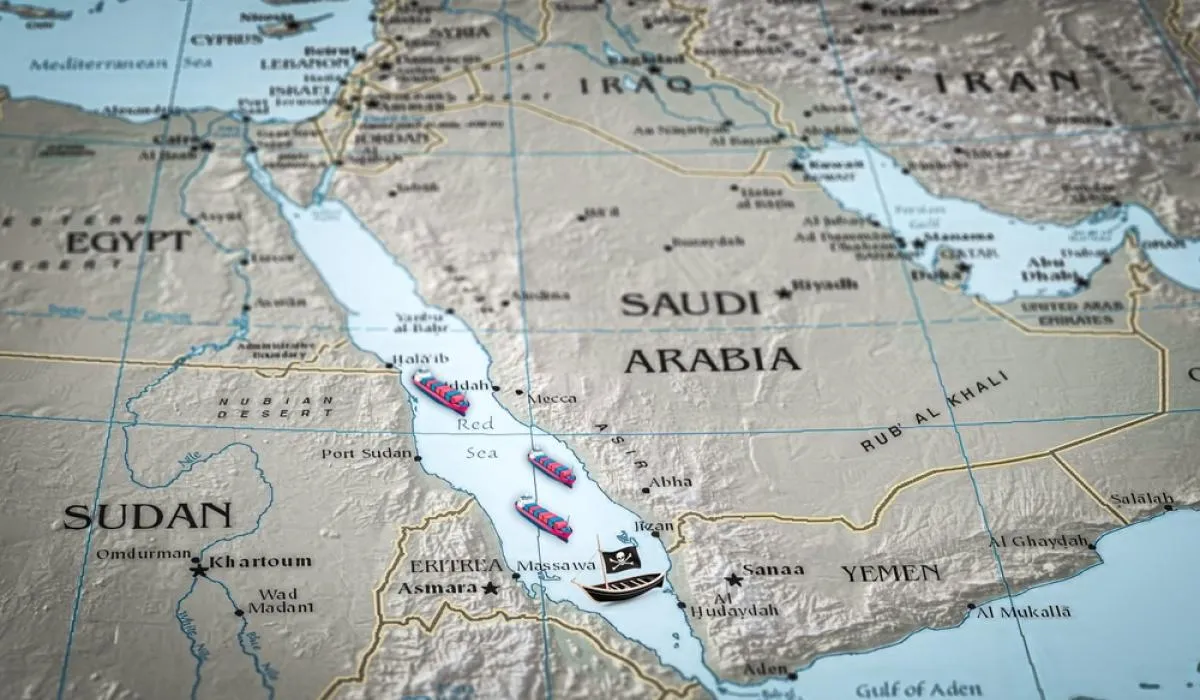
Since the Israel-Gaza war erupted one year ago, the Middle East has been gripped by escalating conflict, humanitarian disaster and regional destabilisation. Despite ongoing international efforts to broker a ceasefire, tensions remain high. Recent clashes between Israel and Hezbollah, the assassination of Hezbollah leader Hassan Nasrallah and Hamas’ political chief Ismail Haniyeh, and Houthi attacks on international vessels in the Red Sea have further inflamed the situation. Meanwhile, Iran-Israel hostility has intensified: in light of Nasrallah’s killing, the massive Israeli attacks on Lebanon, and Iran’s missile strike on Israeli targets, the risk of regional escalation has increased tremendously in recent weeks.
Saudi Arabia’s Balancing Act
Amid this turmoil, key regional players remain deeply concerned about an uncontrollable escalation. Saudi Arabia, in particular, finds itself in a delicate position: it seeks to maintain solidarity with the Palestinian cause while keeping perspectives for a pragmatic engagement with Israel on the table. Hence, the Israel-Gaza war presents a dilemma for Saudi Arabia, threatening its national, geostrategic and economic ambitions. Under Crown Prince Muhammad bin Salman (MbS), Saudi Arabia is undergoing a profound transformation, driven by Vision 2030, an ambitious agenda to diversify the economy away from oil. The plan involves major investments in digital infrastructure, tourism, entertainment, logistics, healthcare, renewable energy and sports, aiming at creating jobs for the country’s young population – known as ‘Generation MbS’ – and positioning Saudi Arabia as a regional hub of knowledge and economic progress.
To achieve these goals, Saudi Arabia has pursued a strategy of regional de-escalation and risk minimisation. The guiding principle behind this de-risking approach is clear: without regional stability, there can be no national progress, and without national progress, there is no political survival. As sectors such as tourism and technology gain prominence, the call for a more stable regional environment grows louder, with many questioning whether sustainable growth can be achieved amid ongoing interregional tensions.
The ongoing crises threaten this trajectory, pushing the kingdom to shift from a ‘Saudi First’ strategy to a more cooperative ‘Not Alone Saudi’ approach. Against this backdrop, the regional crisis offers both challenges and opportunities for Saudi Arabia. On the one hand, regional instability undermines Saudi geoeconomic ambitions and threatens the political authority of MbS. On the other hand, it allows Saudi Arabia to position itself as a regional leader.
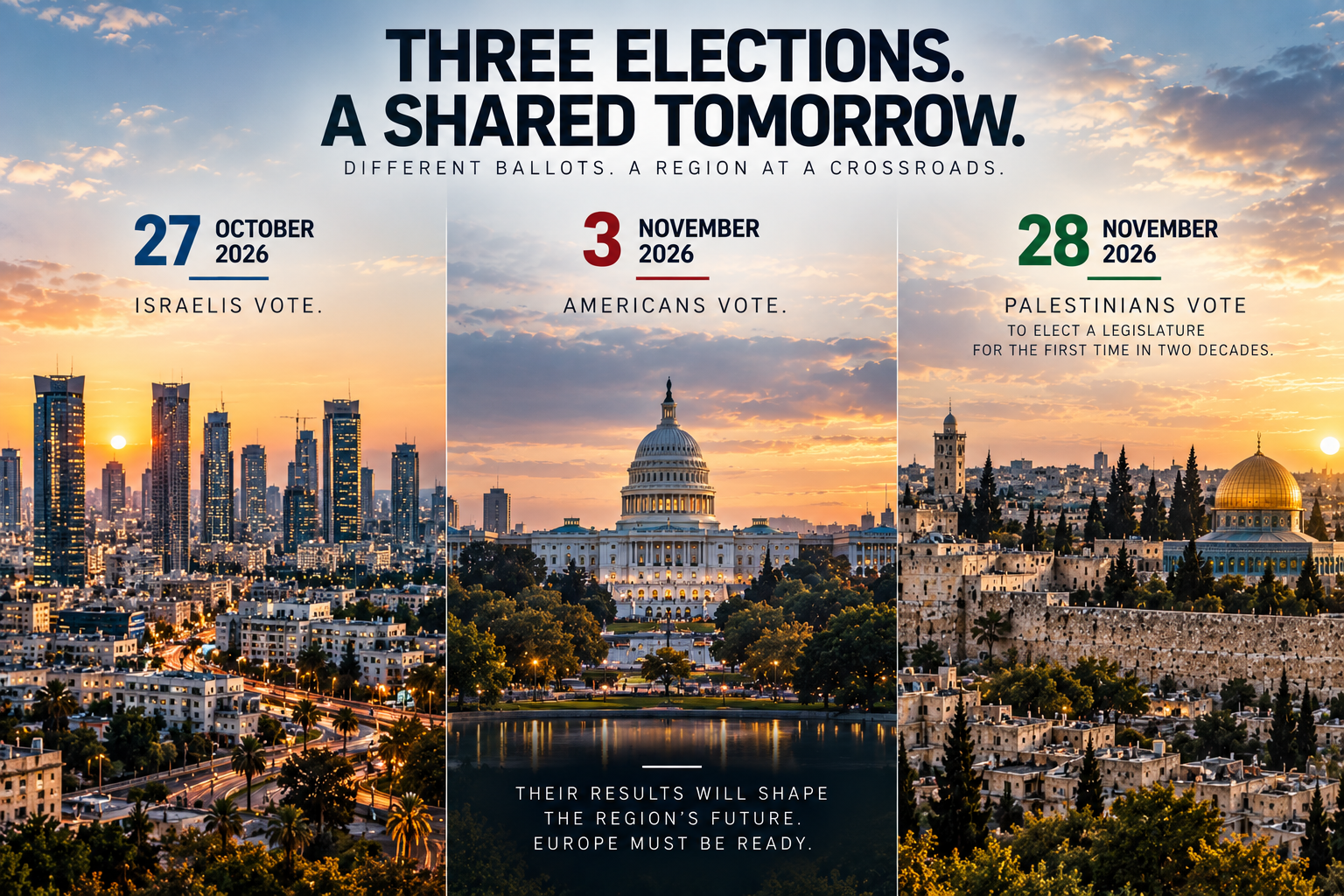
Saudi officials continue to refer to the 2002 Arab Peace Initiative, spearheaded by the late King Abdullah, which calls for a two-state solution to the Israeli-Palestinian conflict. The kingdom seeks to reinforce its image as a defender of Palestinian rights, drawing on its moral and religious responsibilities as the Custodian of the Two Holy Mosques in Mecca and Medina. Here, it also retains a strategic advantage in negotiations with Israel and the U.S. over the potential normalisation of relations with Israel. Indeed, these talks were paused since October 7th, 2023, but they could be resumed in the future – for instance, after the US elections this November, or the election of a new Israeli government in 2026. As of today, however, normalisation with Israel is highly unlikely. From Riyadh’s perspective, the stakes for normalisation have risen, and the creation of a Palestinian state is now a central demand.
Potential for Regional Mediation
In recent weeks and months, Saudi Arabia promoted a number of international and regional diplomatic initiatives to de-escalate the Israel-Gaza war. At the UN General Assembly in September, for instance, Saudi Arabia announced the formation of a global alliance to push for a two-state solution. These actions demonstrate that Saudi Arabia is positioning itself as a potential honest broker in the region. However, Saudi efforts still fall short of a comprehensive strategic plan. The current approach focuses on managing the conflict rather than ending it; a long-term approach is needed to resolve it permanently. Here, Saudi Arabia can play a central role by exerting greater pressure on Israel, insisting that normalisation occurs only if there is a realistic prospect of achieving a sustainable two-state solution.
Additionally, the resumption of diplomatic ties between the Kingdom and Iran in March 2023 provides Riyadh additional leverage on conflict mitigation. Indeed, the concrete results of Iranian-Saudi rapprochement remain minimal, but at least regular communication channels exist. Embassies have been re-opened, Iran’s former Foreign Minister Hussein Amirabdollahian and his Saudi counterpart Faisal bin Farhan have met on several occasions, and Saudi Crown Prince Muhammad bin Salman received Amirabdollahian in Jeddah in August 2023. In November 2023, Saudi Arabia’s leadership invited Iran’s then-President Ebrahim Raisi to participate in the summit of the Organisation of Islamic Cooperation (OIC) in the context of the escalating Israel-Gaza war.
Even after the most recent Iranian attack on Israel, Saudi Arabia and Iran continue their diplomatic dialogue: Iran’s President Masoud Pezeshkian met Saudi Arabia’s Foreign Minister Prince Faisal bin Farhan in Qatar to discuss regional tensions one day after Iran launched more than 180 ballistic missiles on Israel. The meeting took place at the sidelines of a summit including high-ranking officials from the Gulf monarchies and Iran in Qatar’s capital of Doha, indicating the serious Gulf commitment to further engage with Iran by taking a position of neutrality in the Iran-Israel conflict.
However, mistrust on both ends still features prominently and undermines chances for concrete security and economic cooperation. Based on historical animosities, asymmetric relations are hard to overcome, and respective threat perception matters. Gulf monarchies – in particular Saudi Arabia – are concerned that Iran could attack them in order to retaliate against a potential Israeli strike on Iran’s nuclear facilities. In such a scenario, US bases or other targets located in the Gulf monarchies could be threatened, either directly from Iran or from its proxies such as the Yemeni Houthis.
Recently, Saudi Arabia has been suffering from Houthi attacks and faced an assault on its oil facilities Abqaiq and Khurais in September 2019, resulting in a 50 percent decline in oil production due to severe damages. At this time, it was said that drones and cruise missiles originating from the north and east were used for the attack, and that they were manufactured in Iran. Currently, Saudi Arabia still considers the resumption of ties as a tactical instrument to promote national economic development.
Riyadh sought to convince Iran to restrain its proxies from attacking Saudi assets, territory and critical infrastructure in exchange for restoring diplomatic relations. This included an immediate commitment from Iran to take de-escalatory steps in Yemen, such as ending military support for the Houthis, pressuring the group to halt cross-border attacks into Saudi Arabia, and engaging in negotiations for a permanent ceasefire.
Despite such deep-rooted challenges, Iran-Saudi relations could drive more engagement for regional de-escalation, as Tehran finds itself in a rather uncomfortable position after the killings of Haniyeh and Nasrallah. As its proxies Hamas and Hezbollah are suffering from the Israeli attacks, Iran could adjust its partnership model with them, as Tehran needs to rely on national capabilities. Furthermore, the Iranian leadership needs to preserve its political legitimacy, and therefore must promote a neighbourhood policy based on commerce and trade in order to address the domestic socio-economic crisis. Here, Pezeshkian takes a developmental approach towards the region and is thus highly interested in Gulf investments and economic diversification.
In March 2023, Saudi Arabia’s Finance Minister Mohammed Al-Jadaan said that Saudi investments in Iran could happen ‘very quickly’: ‘We don’t see impediments as long as the terms of any agreement would be respected.’ His comments echo claims from 2021 that a normalisation of ties could result in up to USD 20 billion of Saudi investment. Despite the growing appetite on both sides for enhanced business relations, however, Saudi Arabia is still too reliant economically on the US partnership and cannot afford to jeopardise it by violating the sanctions regime. As a consequence, today’s bilateral trade volume is still relatively weak.
Nevertheless, concrete potential for more strategic security cooperation exists. For instance, Iranian researchers suggest that Saudi Arabia could become a potential monitoring party in case negotiations on the Iranian nuclear program between Iran, Europe and the US are resumed. Economically, Saudi Arabia could provide financial assistance to Iran through the BRICS’ New Development Bank (NDB). Furthermore, Iranian experts state that Pezeshkian could promote a more personal relationship with the Saudi leadership similar to previous ties between Iranian and Saudi leaders such as the late King Abdullah and former Iranian President Ali Akbar Hashimi Rafsanjani.
Moreover, Iran and Saudi Arabia could enter less contested arenas of cooperation such as Iraq or Central Asian countries. In Iraq, Saudi Arabia has not only started to invest, but has taken steps of public diplomacy to show its interest to engage with Iraqi stakeholders that enjoy close ties to Iran. For instance, the Saudi ambassador to Iraq, Abdulaziz al-Shammari, visited the two prominent Iraqi Shiite shrines, Karbala and Najaf, in May to show that remaining tensions are not driven by ideological or sectarian issues.
Saudi Arabia’s Role in the Israeli-Palestinian Conflict
Regarding the Israeli-Palestinian conflict, Saudi Arabia has shown tremendous interest in realising the two-state solution, which is also the goal of Iran. Despite similarities in reaching a two-state solution, though, strategies to achieve this goal differ significantly from each other: whereas Iran is using proxy forces and military escalation towards Israel, Saudi Arabia follows a pragmatic and diplomatic approach. Here, the Saudi leverage could further increase: in a post-conflict scenario, warring parties need a mediator. As Saudi Arabia aims to prevent taking sides at all costs, it constitutes a potential facilitator for the future. Furthermore, Saudi Arabia could push Iran to support a ceasefire in Gaza.
Such a Saudi approach does not only require shuffle diplomacy on different levels, but a different narrative to countering the regional popularity of radical groups like Hamas, Hezbollah and the Houthis. By promoting an alternative vision – one centred on political stability and economic progress – Saudi Arabia could offer the people of Gaza and the broader Arab world a viable path forward. In this regard, Vision 2030 represents more than just a national socioeconomic modernisation agenda; it is promoted as a blueprint for regional development. Inside Saudi Arabia, the interest has grown to take more shared responsibility for regional stability through Vision 2030. In a post-war scenario, a reformed Palestinian Authority (PA) could address the Saudi leadership to contribute to Vision 2030, which could convince Riyadh to provide political, financial and economic support in coordination with other regional and international partners. While Vision 2030 has thus far focused mainly on geoeconomic aspects, it could also serve as a platform for geopolitical dialogue and cooperation.
The impact of regional conflicts on Saudi Arabia is no longer viewed through a distant lens. The direct correlation between external instability and domestic economic challenges is a recurring theme in public discourse. Conversations, particularly among the younger generation, increasingly focus on the economic ramifications of regional tensions. The youth are more vocal on platforms like social media, where discussions about the broader business environment, investments and diversification initiatives dominate. As such, Vision 2030 cannot be realised in isolation.
There is a growing awareness of the importance of regional cooperation, not only for political stability but also for economic growth. Collaboration with neighbouring countries is thereby seen as essential to building a stable and prosperous future. As Saudi Arabia continues to diversify its economy, regional partnerships will play a critical role in ensuring long-term success. The Saudi leadership could thus promote a narrative of cross-regional and multilateral partnerships, symbolised by Vision 2030, at both the economic and political levels. Consequently, it could consolidate Crown Prince Muhammad bin Salman’s status as the undisputed leader of the Arab world.
Other Researches