Football and Political Influence: The EU’s Role in Regulating Global Tournaments
About
Football and Political Influence: The EU’s Role in Regulating Global Tournaments
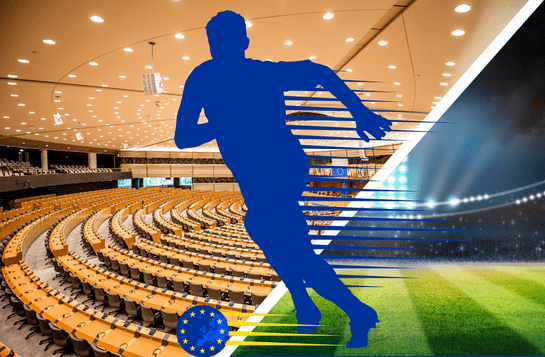
In recent years, football has increasingly intersected with global politics. Major competitions organized by institutions such as FIFA and UEFA now carry significant geopolitical, economic, and symbolic weight. At the same time, the use of major sporting events as tools of "sport-washing" to improve the international image of governments accused of human rights abuses has sparked intense debate among policymakers, civil society organizations, and human rights advocates.
The upcoming 2026 FIFA World Cup—the largest edition of the tournament ever organized—offers a timely opportunity to reflect on the governance of global football. As the global center of the football economy and a political actor committed to democracy, human rights, and the rule of law, the EU is uniquely positioned to contribute to shaping the future governance of the sport.
To explore concrete solutions and future policy frameworks, we invite you to join our upcoming institutional event.
Event Details
Date: June 10th, 2026
Location: European Parliament, Brussels
Objective: To facilitate a constructive dialogue between policymakers, academics, sports governance experts, and journalists on how Europe can promote responsible governance, democratic values, and ethical standards in the global game.
Speakers
The panel will bring together key figures from European institutions and global sports governance:
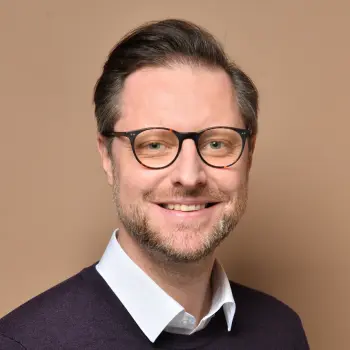
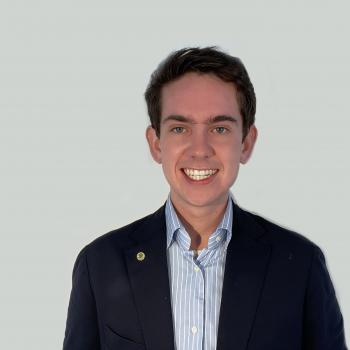
- Bogdan Zdrojewski | Hosting MEP, CULT Vice-Chair
- Hannes Heide | MEP, S&D Group
- Jérôme Champagne | Former FIFA Secretary-General
- Sebastian Sons | Senior Researcher at BIC and CARPO
Moderated by: Yasmine Akrimi | Research and Project Lead at BIC
Program and Format
The event will feature a dynamic and interactive format designed to stimulate debate.
Opening remarks: Introductory speeches by MEPs.
Expert panel discussion: A moderated roundtable with our speakers and researchers.
Q&A session: An open discussion with the participants.
Practical Information
Estimated duration: 1 hour 30 minutes
Hosting capacity: 40 attendees (early confirmation is advised to ensure access to the Parliament).
Discussion Questions

Meet Our Thought Leaders
.jpeg)

Stay Updated on Research
.webp)